This route winds its way along the Ten-Li Qinhuai River, taking you from the imperial examination halls to the bustling streets and alleys, from imperial temples to Republican-era architecture, before bringing your day’s journey to a close amidst the sound of oars and the glow of lanterns.
Morning: Imperial Examination Culture and Imperial Temples
First stop: Nanjing Museum of the Imperial Examination (approx. 1.5 hours)
Beginning at the underground museum situated on the site of the former Jiangnan Examination Hall, the visitor route winds down a ramp, with examination papers and essays from candidates throughout the ages displayed on either side. Most striking are the cramped examination cubicles—compartments one metre wide and two metres deep—where a single candidate had to remain for nine days and six nights. The exhibited cheat sheets—measuring just one cun square yet filled with 40,000 characters—are truly awe-inspiring.
Second Stop: Confucius Temple Complex (approx. 1 hour)
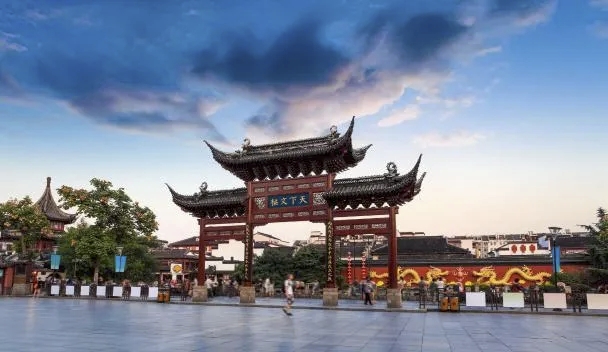
Walk to the Great Hall of Achievement to admire the country’s longest ceremonial wall (110 metres) and the unique design of the Confucius Temple, which features a Panchi pond fed by natural running water. From the Northern Song Dynasty to the present day, this has been the centre of culture and education in Jiangnan; standing beneath Lingxing Gate, one can sense the aura of a thousand years of scholarly tradition.
Third Stop: Da Bao’en Temple Ruins Scenic Area (approx. 1.5 hours)
A 15-minute walk away. The ‘Buddha’s Skull Relic’—a priceless treasure of the Buddhist world—was unearthed here; today, a glass pagoda stands on the original site, which at night is bathed in a kaleidoscope of coloured glass-like light. The fragments of the glazed tower’s arches and artefacts from the underground chamber on display allow visitors to imagine the splendour of the ‘Number One Pagoda under Heaven’ from the Ming Dynasty.
Lunch Recommendations (approx. 1 hour)
Head to the Laomendong or Confucius Temple areas to sample snacks such as duck blood vermicelli soup and beef potstickers, or pop into a shop to try red bean glutinous rice balls and five-coloured rice cakes.
Afternoon: Local Streets and Ancient Gardens
Fourth Stop: Laomendong and Santiaoying Historical and Cultural Districts (approx. 2 hours)
This area is a hub of traditional Nanjing dwellings, where bluestone-paved roads, blue-brick walls and intricately carved doors and windows have preserved the street layout of the Ming and Qing dynasties in its entirety. You can pop into the Velvet Flower Experience Centre to watch the process of making silk peony flowers, or step inside the Jinling Folding Fan Shop to see master craftsmen carving characters onto bamboo frames. Hidden away in the alleys of Sanqi, Qi and Ba are local favourites that locals return to buy day after day, such as smoked fish, lotus root in rock sugar syrup and rice cakes made with fermented rice wine.
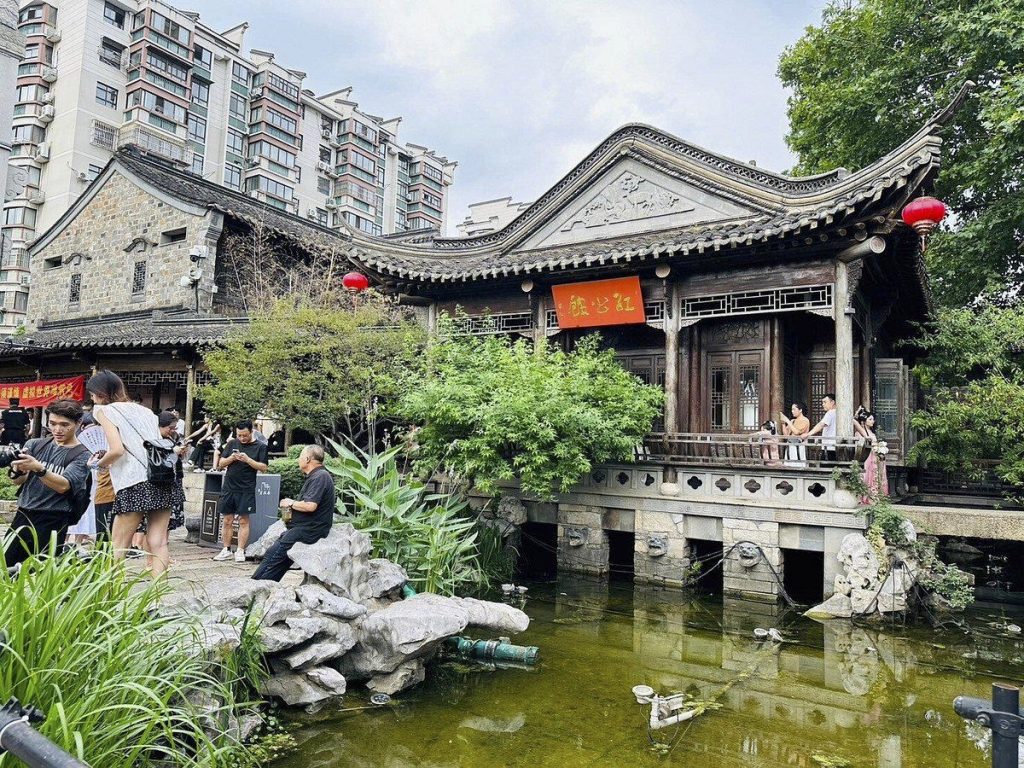
Fifth Stop: Zhan Garden (approx. 1 hour)
It is about a 10-minute walk from Lao Mendong. Known as ‘Jinling’s Foremost Garden’, it is Nanjing’s best-preserved classical Ming-dynasty garden and also houses the Taiping Heavenly Kingdom History Museum. The rockeries, water pavilions and winding corridors are arranged in a harmonious and artful manner, whilst the ‘Immortal Peak’—a Taihu stone formation within the garden—is truly a masterpiece.