
Among the rustic eateries scattered across Nanjing’s Jiangning District, there is one dish that needs no elaborate presentation yet draws food lovers from dozens of kilometers away—the Jiangning Big Fish Head. It is more than just a dish; it is a culinary emblem bestowed by Jiangning’s landscapes, and the most bold and vivid expression of nostalgia on the tables of Jinling.
I. Origin from Mountains and Waters: A Fresh Journey from Reservoir to Table
The soul of the Jiangning Big Fish Head lies first and foremost in its provenance. The fish heads used for this dish are by no means ordinary pond-raised fish; they come from high-quality reservoirs in areas such as Hengxi and Guli in Jiangning. These waters are tucked deep among rolling hills, characterized by clear, flowing water with strong circulation and consistently cool temperatures, allowing the fish to grow slowly in a natural, free-range environment. The bighead carp (also known as fathead carp or spotted silver carp) in these reservoirs feed on plankton, developing firm yet tender flesh entirely free from the muddy taste often found in pond-raised fish. A qualified big fish head must weigh at least ten jin (over 5 kilograms)—the larger the head, the richer the gelatin and the deeper the flavor. Locals have a saying: “A silver carp head is like a meaty steamed bun,” capturing the plump, generous appearance of this prized cut. Because big fish heads demand exceptionally high water quality and long growth cycles, they are not always readily available; true gourmands often call ahead to reserve their portion days in advance.
II. Two Culinary Paths: The Dual Art of Braising and Simmering
In Jiangning, there are two classic approaches to preparing the big fish head—one red, one white—each with its own merits, much like thick ink and deliberate blank space in a landscape painting.
Braised Big Fish Head in Soy Sauce: The Bold Spirit of “Red-Cooking”
The braised big fish head reigns as the “king of hearty dishes” in Jiangning farmhouse cuisine. The chef splits the enormous head in half, then marinates it repeatedly with ginger, scallions, and cooking wine to eliminate any fishiness before pan-frying it until both sides turn golden brown—a crucial step that seals in the juices and triggers the Maillard reaction, releasing an irresistible roasted aroma. Then come the seasonings: light soy sauce, dark soy sauce, rock sugar, star anise, cinnamon bark, and other spices, all simmered with stock over medium-low heat for 20 to 30 minutes. As the sauce gradually reduces, its amber hues seep layer by layer into the bones, infusing every fiber of fish with a savory, slightly sweet depth.
When plated, the fish head sits proudly in the center, its glistening thick sauce shimmering under the light, adorned with a sprinkling of fresh scallions or cilantro. The presentation is vibrant, the aroma intoxicating. Lift a piece of the cheek meat—the most prized part of the head, exceptionally tender due to constant movement—and it practically dissolves on the tongue, releasing waves of savory richness balanced by a subtle sweetness. The lips and brain are fiercely contested by connoisseurs: rich in gelatin, they melt like butter, coating the lips and throat with a luxurious texture, often praised as a nourishing delicacy. Paired with a steaming bowl of rice, topped with a spoonful of the thick, savory sauce, the satisfaction is enough to make any diner forget their manners—truly a “rice killer” in the best sense.
Simmered Fish Head Soup: A Lyric Poem of Snow-White Freshness
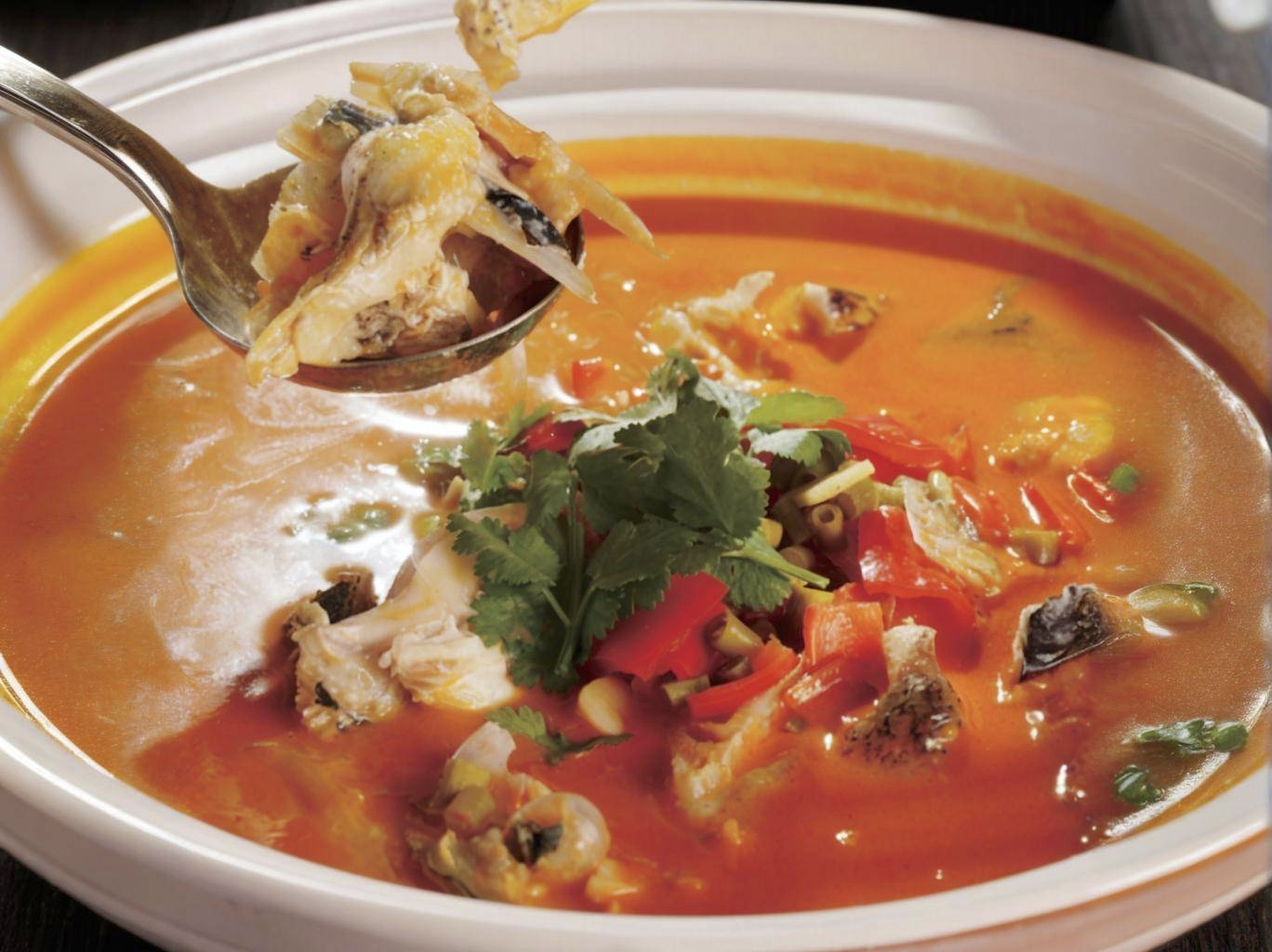
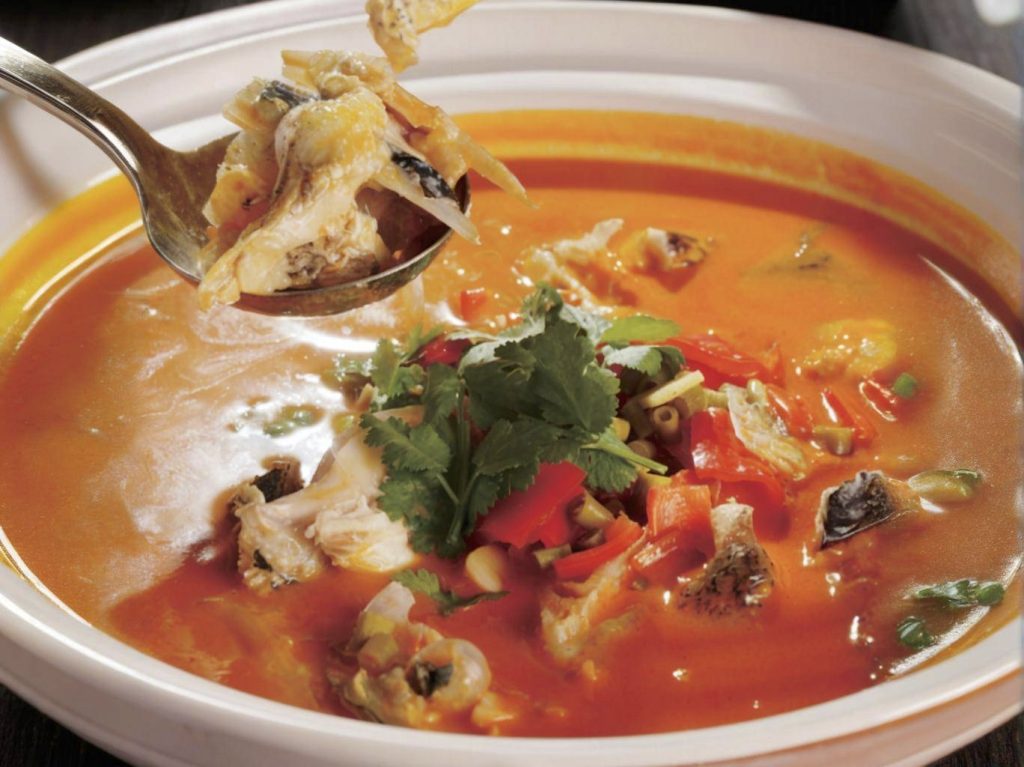
If the braised version represents the bold side of the big fish head, then the soup is its graceful counterpoint. The preparation begins the same way—frying the head until golden on both sides—but then comes the key secret: pouring in boiling water. This is the crucial technique for achieving the milky white broth: cold water would cause the proteins to coagulate, but only boiling water can fully emulsify the collagen and fats from the fish head, resulting in a soup as rich and white as fresh milk. Slices of ginger, scallion knots, and optional additions like a few slivers of ham, goji berries, or tender tofu are added to enhance the savoriness, then brought to a rolling boil for ten to fifteen minutes until the soup reaches perfection.
A bowl of fish head soup presents a color like creamy white jade, with wisps of steam carrying a delicate, enticing fragrance. The first sensation on the palate is “depth”—a smooth, mellow richness that seems to concentrate the essence of the entire reservoir into every spoonful. Then comes the “freshness”—the natural sweetness of the fish head harmoniously blended with the subtle aromatics, utterly devoid of any fishy aftertaste. The fish meat, gently poached in the broth, retains an astonishing tenderness; dipped in a bit of ginger and soy sauce, its clean freshness intertwines with the soup’s richness for a lingering finish. On a cold winter’s day, a bowl of this soup warms the body from the stomach outwards, earning it the affectionate title of “Jiangning’s winter sunshine.”
III. Culinary Map: Two Gastronomic Heartlands and Their Artisan Keepers
In Jiangning, for the most authentic big fish head experience, two culinary landmarks are essential destinations: Datangjin and Shitang Zhuhai (Bamboo Sea).
Datangjin, located in western Jiangning, is a region renowned for agro-ecological tourism, home to numerous farmhouse restaurants with decades of heritage. The proprietors, generations of whom have lived by the water, each possess their own closely guarded secrets—some add a spoonful of homemade broad bean paste to the braising liquid for an extra layer of fermented richness; others toss in a few slices of locally pickled potherb mustard to draw out a deeper savory sweetness. Every establishment has its own “secret formula,” but all share a common reverence for the integrity of their ingredients.
Shitang Zhuhai offers a different atmosphere altogether. Here, tens of thousands of acres of bamboo forests undulate like green waves, with babbling streams weaving through the landscape. Farmhouse restaurants are built against the hills and beside the water. Seated in a bamboo pavilion, with layers of bamboo groves swaying before your eyes and a steaming giant fish head on the table, a mountain breeze on your face and the subtle fragrance of bamboo enhancing your meal—this is not just dining; it is an experience of eating in harmony with nature. A local saying goes: “Once you’ve eaten at Shitang, you won’t eat fish anywhere else”—a testament to the renown of its fish head dishes.
In townships such as Tangshan, Guli, and Hengxi, countless other farmhouse restaurants also feature this signature dish. Many of these veteran establishments rely solely on repeat customers, and reservations a day in advance are often essential to secure a fish. Most restaurants include complimentary home-baked pan-grilled cakes or hand-pulled noodles, perfect for dipping into the braised fish head sauce—a marriage of carbohydrates and rich flavor that is utterly irresistible.
IV. The Art of Eating: The Proper Way to Savor a Big Fish Head
Enjoying a Jiangning big fish head demands patience and a mindful approach. Different parts of the head offer distinct flavors, and seasoned diners follow a time-honored sequence for maximum enjoyment:
-
Step One: The Lips — The fish lips, at the very front of the head, are exceptionally high in gelatin—smooth, springy, and often compared to “bear’s paw from the water.”
-
Step Two: The Brain — Gently lift the skull cap to reveal the translucent brain matter, known as “crystal jelly.” Suck it through a straw or scoop it with a small spoon—smooth, velvety, and intensely savory.
-
Step Three: The Cheek Meat — The flesh on both sides of the head, just behind the gills, is the most tender “living meat” of the entire fish, firm and delicate from the constant motion of breathing.
-
Step Four: The Bone Meat — Carefully pry off the meat clinging to the bones and savor it slowly, as the marrow’s flavors have fully permeated the flesh during cooking.
-
Step Five: The Sauce Finish — The grand finale lies in the sauce. For the braised version, mix the thick, savory sauce into rice for an unparalleled treat; for the soup, drink it straight or soak pan-grilled cakes in it for an extra boost of umami.
V. Cultural Essence: The Jiangning Character Reflected in a Fish Head
The Jiangning big fish head is, in essence, a reflection of the Jiangning people’s character. This dish is rustic yet refined, unpretentious yet meticulous—just like the locals themselves, who possess both the ruggedness of the mountains and the gentleness of the waterways. Family members or a group of friends gathered around a single enormous fish head, chopsticks crossing amid laughter and chatter—that unpretentious warmth of shared enjoyment is the most comforting expression of Jiangning’s local culture.
An old saying among Jiangning farmers goes: “No feast is complete without a fish head; no banquet is proper without fish soup.” At weddings, funerals, festivals, and family reunions, the big fish head always takes center stage as the grand finale, embodying wishes for abundance and prosperity. The ritual of the fish head soup being served and shared further strengthens the bonds among those at the table. Each fish head has witnessed countless moments of reunion, joy, and warmth, becoming one of the most treasured taste memories of Jiangning.
The Jiangning Big Fish Head—one dish, one pot of soup—simmered with the essence of mountains and waters, served up with the warmth of everyday life. No matter where you come from, once you sit down at this table, that first taste of tender, savory fish will forge an unforgettable bond between you and Jiangning. Should fate bring you to this corner of Nanjing, do not miss this rural treasure—for in indulging in its delights, you will taste the very poetry of Jinling’s landscapes.
On Nanjing’s vibrant culinary canvas, few delicacies spark as much intrigue—and sheer fascination—as the “Live Pearl” (Huo Zhu Zi). This is not merely a snack; it is a centuries-old tradition, a test of gastronomic courage, and perhaps the most extraordinary expression of Nanjing’s relentless pursuit of freshness.
The Art of Incubation: Nature’s Perfect Timing
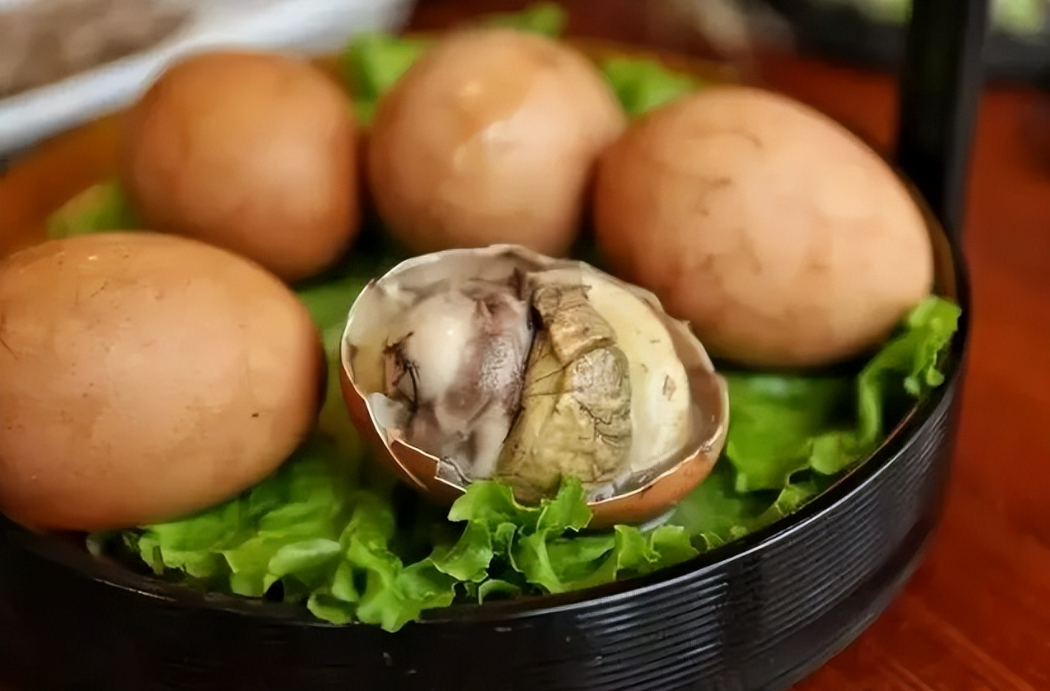
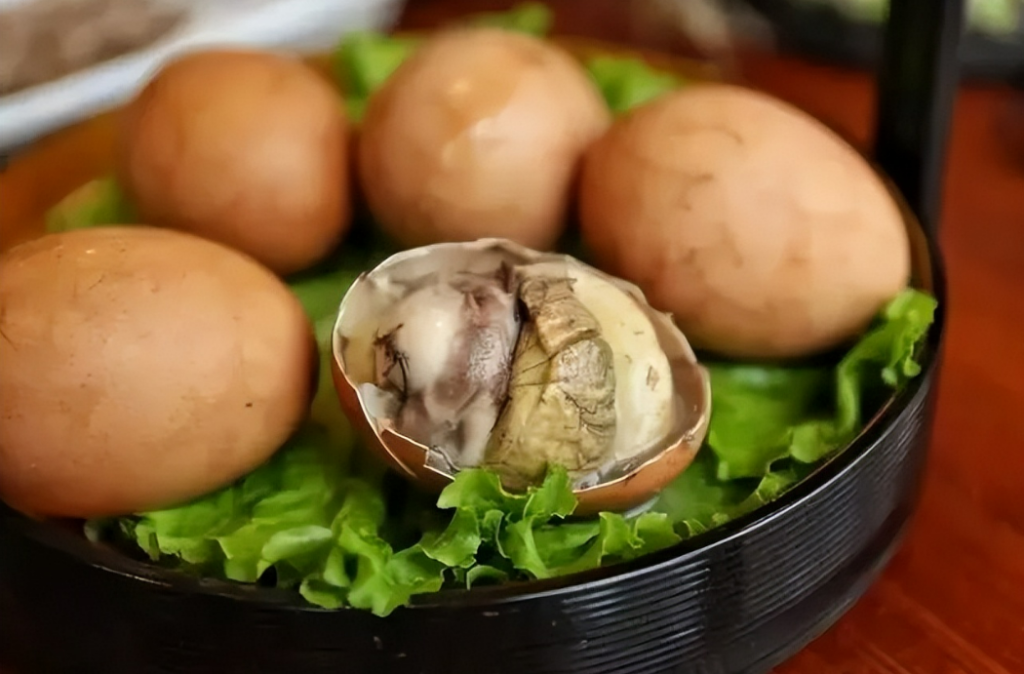
Far from an ordinary egg, the Live Pearl is a carefully incubated chicken embryo, harvested at the precise window of twelve to fourteen days—a moment of biological perfection when the embryo has begun to take form yet remains enveloped in its original liquid richness. At this stage, the developing chick has not yet developed bones or feathers, existing instead as a translucent, pearl-like orb suspended in a pool of natural broth. The name “Live Pearl” derives from this visual poetry: the embryo, nestled within the egg white, gleams like a precious jewel cradled in a silken embrace. The incubation process is an art in itself, requiring meticulous temperature control—hovering around 37.5°C—and exact humidity levels, with skilled artisans turning the eggs multiple times daily to ensure even development. The result is a delicacy that cannot be replicated by mass production; each batch represents a delicate dance between nature and human craftsmanship.
The Ritual of Savoring: A Three-Act Sensory Journey
Savoring this “folk elixir” follows a time-honored ritual that transforms eating into a contemplative ceremony:
Act I: The Awakening Sip — Gently tap the wider end of the shell with a small spoon or your fingers, creating a modest opening. Tilt your head back and let the warm, crystalline broth flow onto your tongue. This “embryonic nectar” is unlike any soup you’ve ever tasted—a clear, golden liquid imbued with an umami so profound and pure it seems to awaken every taste bud at once. Its flavor is delicate yet complex, carrying subtle notes of chicken essence mingled with an indescribable freshness that speaks of life itself. Connoisseurs believe this broth holds the very essence of the egg’s vitality.
Act II: The Textural Revelation — After the broth comes the main event. Gently peel away the remaining shell to reveal the egg white, now firm yet tender, encasing the developing embryo. Dip it lightly in a pinch of fine salt and Sichuan pepper—or, for the purist, enjoy it unadorned. The first bite offers a revelation of textures: the albumen is delicately resilient, the yolk creamy and rich, and the tiny embryo itself—barely the size of a thumbnail—presents an intriguing firmness that yields to a subtle, meaty savoriness. Each mouthful offers a delightful interplay of softness and gentle chew.
Act III: The Lingering Finish — The final piece, often the small, darker mass at the tip where the embryo’s head has formed, delivers the most concentrated essence of flavor. Some diners save it for last, savoring it slowly as the satisfying climax of the experience. A final sip of tea or a bite of pickled ginger cleanses the palate, leaving behind nothing but the memory of an extraordinary culinary encounter.
A Delicacy of Courage and Discernment
Let it be clearly understood: the Live Pearl is worlds apart from the so-called “rotten eggs” or “dead embryos” that have given this category of food a questionable reputation elsewhere. Those are eggs where incubation has failed, where the embryo has perished and decomposition has begun—a truly unpalatable and potentially hazardous affair. The Live Pearl, by contrast, is a live, healthy embryo, carefully monitored and consumed at its peak of freshness. The difference is as vast as night and day, and Nanjing locals are quick to educate the uninitiated on this crucial distinction.
In Nanjing, consuming Live Pearls is not merely about sustenance—it is a rite of passage, a badge of local identity. Street vendors have been selling them for generations from steaming cauldrons at dawn, their calls echoing through misty alleyways. Elderly aunties deftly crack shells with practiced precision, handing them to eager customers on the morning commute. For many Nanjing natives, the taste of Live Pearl is intertwined with childhood memories—of grandparents carefully preparing the eggs, of bustling morning markets, of a city waking to the aroma of simmering broth. To eat a Live Pearl is to participate in a living tradition that has connected generations of Nanjing residents to their culinary heritage.
Beyond the Bite: Nutritional Lore and Modern Revival
Traditional Chinese dietary culture holds the Live Pearl in high esteem, believing it to be rich in essential amino acids, proteins, and bioactive compounds. It is sometimes prescribed as a restorative tonic for the frail or convalescent, earning it the affectionate nickname “the poor man’s ginseng.” Modern nutritional analysis has confirmed that the embryo at this stage contains higher levels of certain nutrients than a regular egg—including lecithin, taurine, and a full spectrum of B vitamins—though, as with all delicacies, moderation remains the wise course.
In recent years, this ancient snack has experienced a renaissance. Upscale restaurants in Nanjing have begun incorporating Live Pearls into innovative tasting menus, pairing them with delicate wines or presenting them on custom ceramic spoons alongside edible flowers. Yet for all its newfound gourmet prestige, the most authentic experience remains the simplest: standing at a street-side stall, egg in hand, steam rising into the cool morning air, joining generations of Nanjing gourmands in a timeless ritual of courage, culture, and pure, unadulterated flavor.
Characteristics of Nanjing Smoked Fish