Seeking a break from the bustle of central Nanjing, I journeyed south to Gaochun, a land woven together by ancient water-town heritage, living intangible craftsmanship and quiet pastoral charm. Over two days, I traced thousands of years of local civilisation, from museum relics to handmade treasures, from stone-paved old lanes to lakeside twilight.
My journey began with Gaochun Ancient Street, known as “the foremost ancient street in Jinling”. Walking along the curved bluestone alley lined with Ming and Qing facades, I wandered past old workshops and snack stalls. Deep inside the lane, I found the studio of the inheritor of Gaochun Feather Tribute Fans. Watching the craftsman sort, clean and arrange goose feathers by hand, I learned that this provincial intangible heritage craft stretches back more than 600 years and was once presented as an imperial tribute in the Ming Dynasty. I brought home a delicate Kongming-style feather fan; when the breeze stirs through the plumes, it carries the quiet craftsmanship of generations. After tasting steaming crab soup buns and local steamed rice cakes, I browsed cultural and creative shops filled with crab-themed ornaments and souvenirs inspired by the Four Treasures of Gaochun.
In the afternoon, I visited Gaochun Ceramics Museum at National Porcelain Town. I stood before elegant bone china state banquet wares, admiring the craftsmanship that makes Gaochun ceramics “white as jade, bright as mirror”. Wandering through the exhibition halls, I followed the evolution of Chinese porcelain. I paused in the craft experience area, watching visitors paint patterns on blank porcelain bodies, capturing unique memories to be fired into lasting keepsakes. Afterwards, I travelled a short distance to Qiqiao Ancient Village. This tranquil Confucian settlement retains weathered ancestral halls and ancient stone bridges. Away from tourist crowds, slow time settles over the lanes, ideal for quiet wandering and discovering folk handcrafts such as plant rubbing and bamboo weaving.
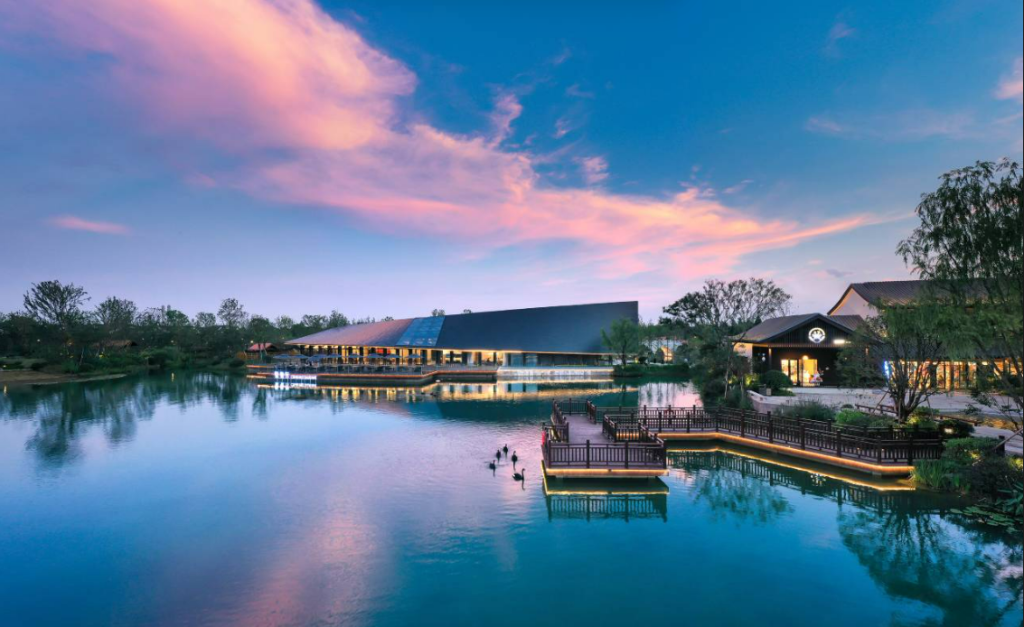
As dusk fell, I headed to Guchengwan Scenic Area. Lanterns lit up the waterside lanes, ripples shimmered under the wooden pleasure boats, and the evening light softened the silhouette of Chunqiu Pavilion. I checked into Grand New Century Resort Gaochun Nanjing, the landmark waterside resort tucked within the scenic zone. From my balcony, I overlooked the lake and water alleys, breathing in the gentle atmosphere of southern Yangtze gardens.
The next morning, I set off for Yaxi International Slow City, China’s official Cittaslow. Country roads wind through farmland and villages. I cycled along the landscape corridor, enjoying open rural vistas. In spring, terraced rape flowers blanket the land; autumn brings golden rice fields stretching to the horizon. Lunch at a Dashan Village farmhouse offered simple, fresh rural dishes seasoned by local ingredients.
Before departing, I stopped by Gaochun Museum beside Baosheng Temple Pagoda. Inside the second-class local museum, bronze ritual vessels from the Zhou Dynasty, Eastern Han carved bricks and well-preserved Qing-dynasty Taoist paintings unfolded the complete story of Gaochun’s six-millennia civilisation. Every artefact connected the ancient tales I had glimpsed in the old streets and workshops.
As I left Gaochun, I carried more than souvenirs: a feather fan, a small ceramic ornament and countless quiet moments. Here, history is not locked behind museum glass alone. It lives within the hands of craftspeople, drifts across Gucheng Lake’s waters, and lingers in the unhurried rhythm of the countryside. This journey taught me that Gaochun’s greatest charm lies in its harmonious blend of ancient heritage, water-town vitality and the peaceful philosophy of slow living.