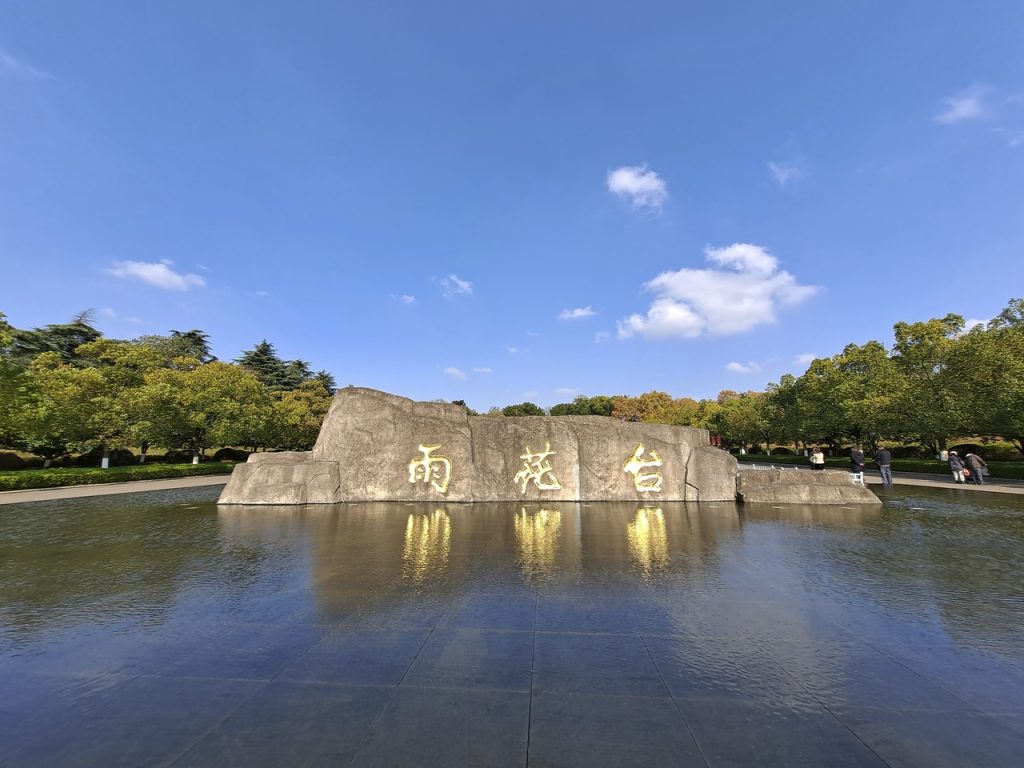
This itinerary begins with ‘Red Memories’, moves on to industrial creativity and historical sites, and concludes the day’s journey amidst the twilight of the mountains and forests, allowing you to experience the unique character of Yuhuatai District, where ‘red, green, ancient and new’ blend together.
Morning: Revolutionary Heritage and Urban Parks
First Stop: Yuhuatai Martyrs’ Cemetery (approx. 2.5–3 hours)
Walk here from ‘Zhonghua Men’ or ‘Ande Men’ stations on Metro Line 1. This is the most iconic landmark in Yuhuatai District and China’s largest commemorative cemetery. Upon entering, follow the central axis to visit, in order: the Pavilion of Loyal Spirits → the Martyrs’ Monument → the Martyrs’ Memorial Hall → Red Scarf Square. Key highlights include:
Martyrs’ Memorial Hall: Displaying the personal effects, letters and biographies of 179 martyrs, the exhibition is modern and deeply moving, making it the centrepiece of the memorial park.
Martyrs’ Monument: Standing approximately 42 metres tall, the monument bears the inscription ‘Yuhuatai Martyrs’ Monument’ in the calligraphy of Deng Xiaoping, with an eternal flame burning day and night before it.
Red Scarf Square (newly built in 2026): Ideal for family educational excursions.
Yuhua Stone Cultural Area: Located near the south gate of the scenic area, visitors can view natural Yuhua stone rough stones, and there are authorised shops selling Yuhua stone crafts.
Afternoon: Industrial Creativity and Foreign Royal Tombs
Second Stop: Chenguang 1865 Creative Industry Park (approx. 1.5 hours)
Approximately a 10-minute taxi ride from Nengrenli (or a 20-minute walk from Yuhuatai). Formerly the Jinling Machine Manufacturing Bureau (1865), it was the cradle of modern Chinese industry. Today, the old factory buildings have been converted into art studios, design firms, cafés and exhibition halls.
Third Stop: Tomb of the King of Boni (approx. 1 hour)
It takes about 10–15 minutes by taxi from Chenguang 1865. This is the only surviving foreign royal tomb in China, housing the remains of a king from the Kingdom of Boni (now Brunei) during the Ming Dynasty. The cemetery is tranquil, and the stone carvings along the ceremonial path possess an exotic flair (stone horses, stone sheep, etc., which differ from the traditional Chinese ‘sheng’ style of stone sculpture); it is a lesser-known spot for learning about the history of Sino-foreign exchanges during the Ming Dynasty. The cemetery is not large and is ideal for a quiet stroll; it takes about 40 minutes to see everything.
Evening and Night: Scenic Sunset Views and the Vibrant City Life
Fourth Stop: Huashen Lake and Huashen Avenue (Approx. 1 hour)
It takes about 10 minutes by taxi from the Tomb of the King of Buni. Huashen Lake is the most liveable area in the Yuhuatai District; with its calm waters and lush greenery, it is ideal for an evening stroll. If you visit in spring (March–April), the cherry blossoms in full bloom along both sides of Huashen Avenue make this one of Nanjing’s lesser-known spots for cherry blossom viewing. It is far less crowded than Jining Temple, making it perfect for taking photographs.