First Stop: Gaochun Old Street (approx. 2–2.5 hours)
Arrive at Gaochun Bus Terminal, then take a short taxi or bus ride to Chunxi Old Street. Also known as Chunxi Old Street, this is the best-preserved Ming and Qing dynasty architectural complex in Jiangsu Province and a national AAAA-level scenic spot. Built during the Ming Dynasty with market origins dating back to the Song Dynasty, the street stretches over 800 metres paved with vermilion stone.
Key highlights:
-
Guanwang Temple (Wenchang Pavilion): A traditional temple complex at the east end of the street, showcasing local religious and cultural heritage.
-
Traditional Craft Shops: The street is lined with shops selling Gaochun’s local specialties — Gucheng Lake crabs, handmade tofu, rice cakes, and Yuhua stone crafts. Many artisans still practice traditional trades such as wood carving and bamboo weaving.
-
Old Street Museum: Housed in a restored Qing-era merchant residence, it displays the history of Chunxi as a commercial hub along the ancient Wan River trade route.
-
Yangshan Stone Stele: Located nearby, one of the largest unfinished stone steles in China, quarried during the Ming Dynasty for the Ming Xiaoling Mausoleum.
Second Stop: Qiqiao Old Village (approx. 1–1.5 hours)
Approximately a 15-minute taxi ride from Gaochun Old Street. Known as the “Number One Ancient Village in Jinling,” Qiqiao has a history of over 2,000 years. According to legend, during the late Western Han Dynasty, Prime Minister Ping Dang fled the Wang Mang usurpation and settled here, building a lacquered wooden bridge — hence the name “Qiqiao.” It is also the second-largest settlement of Confucius’ descendants in the world.
Key highlights:
-
Nanling Gate: The ancient village entrance gatehouse, marking the boundary of the historic settlement.
-
Qiqiao (Lacquer Bridge): Originally a wooden bridge coated in red lacquer for preservation, now a three-arch stone bridge rebuilt in 1953 and listed as a Nanjing cultural heritage site.
-
Kong Family Ancestral Hall: Dedicated to the Confucius lineage that has lived here for generations, with prayer and wishing areas showcasing Confucian cultural heritage.
-
“Water Pavilion” Architecture: Unique stilt-like merchant buildings built over the river, with wooden facades facing the street and backs to the water — a distinctive feature of this ancient water-town market.
Afternoon: Mountain Forests and the International Slow City
Third Stop: Youzishan National Forest Park (approx. 2 hours)
Approximately a 20-minute taxi ride from Qiqiao. Known as the “father mountain” of Gaochun, Youzishan (Wanderer’s Mountain) takes its name from the legend that Confucius climbed this mountain during his travels and felt a longing to return home. It is a national AAAA-level scenic area and national forest park, renowned for the convergence of Confucian, Buddhist, and Taoist cultures.
Key highlights:
-
Zhenru Chan Temple: Founded in the 18th year of the Ming Wanli era (1590), this is the lower monastery of Jiuhua Mountain, one of China’s four sacred Buddhist mountains. The 20-metre-tall Amitabha Buddha statue in the square is the largest in the Jinling region and one of the largest in East China, weighing over 1,000 tons.
-
Wensheng Hall: Built to commemorate Confucius’ lectures on this mountain, blending Confucian heritage with the natural landscape.
-
Yunqi Boardwalk: A mountain-hugging wooden walkway that wraps around Dayou Mountain like a silk scarf, offering panoramic views of forests and distant lakes.
-
Chunqing Tea Garden: Known as “Nanjing’s Tea Country,” this terraced tea sea was a filming location for the TV drama In the Name of the People. During tea-picking season, visitors can experience harvesting and learning about tea firsthand.
Fourth Stop: Yaxi International Slow City (approx. 1.5–2 hours)
Approximately a 25-minute taxi ride from Youzishan. Designated in 2010 as China’s first “International Slow City,” it spans over 50 square kilometres of rolling hills, villages, and farmland, embodying the philosophy of slow living.
Key highlights:
-
Wenfeng Pagoda: Climb to the top for a bird’s-eye view of the vast rapeseed flower fields and the patchwork of villages, tea gardens, and woodlands.
-
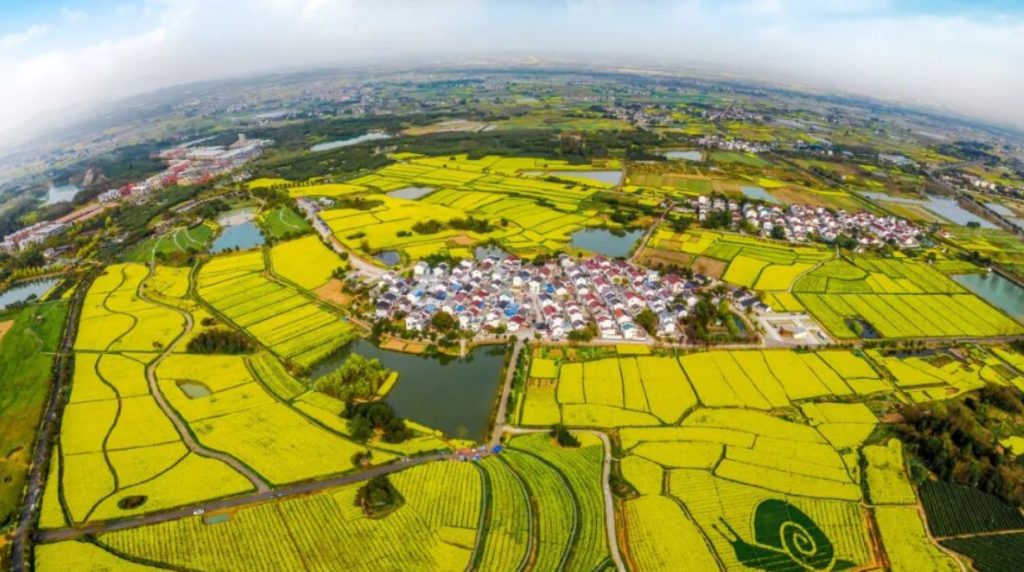
Rapeseed Flower Sea (March–April): Over 20,000 mu of golden rapeseed blossoms cascade across the hilly terrain in layered terraces — one of China’s most celebrated spring flower destinations. In other seasons, the green fields and rural scenery offer a peaceful retreat.
-
Lujia Pastoral Station: A popular rest spot with lawns, food stalls, and seasonal events such as flower-field hot pot, lawn music festivals, and traditional craft experiences.
-
Dashan / Lujia Food Villages: Taste authentic rural Gaochun cuisine — old-stove rice crust, silky tofu, free-range chicken soup, and seasonal farm vegetables.
Evening and Night: Lakeside Sunsets and Slow Living
Fifth Stop: Gucheng Lake Water Slow City (approx. 1 hour)
Approximately a 30-minute taxi ride from Yaxi. Located on the shores of Gucheng Lake — the source of Gaochun’s famous hairy crabs — this 8,000-mu lakeside resort is ideal for an evening stroll.
Key highlights:
-
Golden Beach and Lakeside Promenade: A man-made beach area perfect for watching the sunset over the lake, with calm waters reflecting the evening sky.
-
Hundred Lotus Garden: In summer, thousands of lotus flowers bloom across the water, creating a serene and picturesque scene.
-
Huashan Village Lakeside Cafés: A short drive away, the villages of Huashan feature trendy cafés such as “Huashan Lanhai” and “Mingtian Zaishuo” (“Talk About It Tomorrow”), set against the backdrop of Huashan Bridge and lake views — often called “Nanjing’s Erhai Lake” for their tranquil beauty.
-
Gucheng Lake Crab Market: If visiting in autumn (September–November), stop at the crab market to take home or dine on Gaochun’s most famous product — the Gucheng Lake hairy crab, a national geographical indication product.