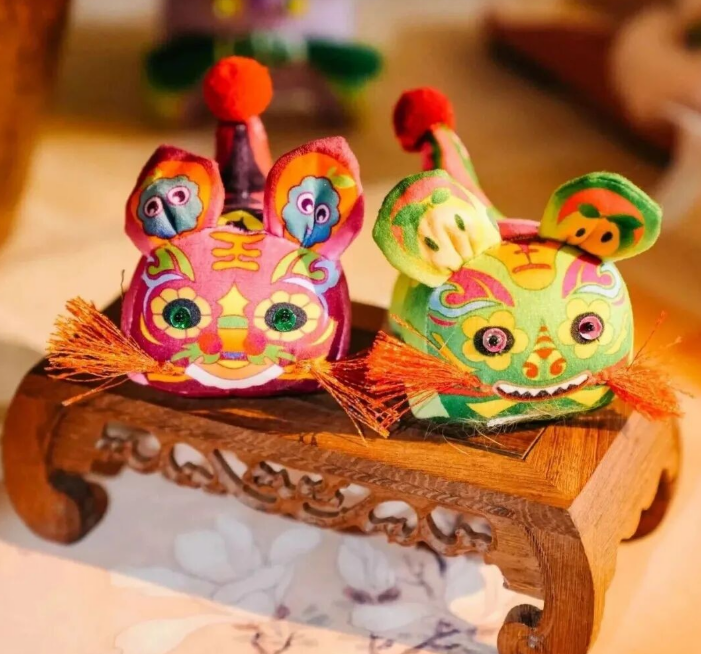
At the Huazhenjiang Intangible Cultural Heritage Workshop on Zhongshan Road in Lishui District, Nanjing, embroiderers’ fingers dance nimbly as silk threads bring vibrant patterns to life across fabric. In this 600-square-meter space, the only sound is the soft whisper of needles passing through cloth. The tiger-head shoes produced here represent the pinnacle of Lishui’s folk embroidery tradition.
I. Cultural Roots: Intangible Heritage Born from the “No. 1 Dragon South of the Yangtze”
The craft of Lishui tiger-head shoes is deeply rooted in local folk traditions. The inheritor, Wu Lihua, was born in Luoshan Village, Hefeng Town, Lishui—a village that preserves the Luoshan Grand Dragon Dance, hailed as the “No. 1 Dragon South of the Yangtze River.” During the Spring Festival, the village holds grand dragon dance performances, and every woman in every household sews special costumes for the dancers while also embroidering colorful tiger-head shoes for the children, praying for good fortune and safety.
The Chinese character for “tiger” (虎, hǔ) shares a harmonious pronunciation with “blessing” (福, fú). Elders stitch their simplest wishes into the soles of these shoes. In Jiangnan folk tradition, when a child reaches about one year old, they wear tiger-head shoes, which are believed to ward off evil spirits and ensure safety, with the hope that the child will grow as vigorous and spirited as a little tiger. This custom has been passed down for over a thousand years, and Wu Lihua is the fourth-generation inheritor of Lishui tiger-head shoes. For over thirty years, she has dedicated herself to this craft, reviving this 400-year-old folk art and helping it take root once again.
II. Artisan Craftsmanship: Over a Dozen Procedures and Thousands of Stitches
Crafting an authentic pair of tiger-head shoes involves a process of astonishing complexity. From pattern cutting, pasting, sole stitching, upper shaping, and vamp assembly to the final stitching, the entire process requires over a dozen meticulous handcrafted procedures.
Among these, sole stitching (nà xiédǐ) is the most painstaking stage. The soles must be stitched firmly with pure cotton thread, layer by layer. Each sole contains four layers of fabric, totaling 24 layers per shoe. A single pair requires thousands of stitches to achieve the durability and breathability needed to keep a child’s feet comfortable.
The creation of the tiger head is the soul of the entire shoe. It requires multiple embroidery techniques—embroidery, poking stitch, and seed stitch—to bring the tiger’s eyes, eyebrows, mouth, and nose to life. Every stitch must be precisely controlled to give the tiger eyes a piercing gaze and the whiskers a spirited lift. Such is the complexity of the craft that even an experienced master artisan needs three to five days to complete a single pair entirely by hand.
III. Tradition and Innovation: From “Trunk Treasure” to Fashion Favorite
Traditional tiger-head shoes are beloved, but younger generations often feel they don’t match everyday outfits. Inheritor Wu Lihua adheres to the philosophy of “preserving tradition without being rigid, innovating without forgetting the roots,” and has boldly reimagined the craft:
-
Material Upgrades: Moving beyond traditional old fabrics, she now uses more breathable materials such as cotton-linen blends, silk, and even wool.
-
Three-Dimensional Design: Transforming the traditional flat tiger head into a 3D embroidered form—making the tiger’s eyes appear to “come alive” instantly.
-
Local Elements: Incorporating Lishui’s “Five Berries” (five local berry varieties) into the designs, creating the “Five Berry Tiger” shoe series. She also embroiders the seasonal colors of Shijiu Lake and the natural scenery of Wuxiang Mountain onto the shoes.
-
Expanded Sizes and Styles: Extending from baby sizes to adult sizes, with fashionable additions such as rabbit fur trims, bead chains, and ribbons—making the shoes suitable for pairing with suits, traditional Chinese attire, or even sportswear.
Today, these reimagined tiger-head shoes are no longer “trunk treasures” tucked away as folk collectibles. They have become a trendy favorite among young people on platforms like Xiaohongshu and Douyin, and have even reached international markets.
IV. Product Range: An Expanding Cultural and Creative Empire Beyond Shoes
With tiger-head shoes at the core, Huazhenjiang has developed eight product series, spanning over 50 designs of intangible cultural heritage-inspired creative products, bringing this ancient craft into every aspect of modern life:
| Product Type | Features |
|---|---|
| Traditional Tiger-Head Shoes | Handcrafted with three-dimensional tiger heads, symbolic of good fortune; available in baby sizes and adult sizes |
| Five Berry Tiger Series | Incorporating Lishui’s “Five Berry” cultural elements; combines regional identity with contemporary style |
| Tiger-Head Sachets | Combining Duanwu Festival folk customs with embroidery; filled with Chinese herbs to repel mosquitoes and calm the mind |
| Tiger-Head Pillows / Nap Blankets | Adorable tiger-shaped designs, soft and practical; popular with office workers and families |
| Zodiac Ornaments & Décor | Zodiac-themed pendants and ornaments crafted using tiger-head shoe embroidery techniques |
| Tiger-Head Bags / Accessories | Fabric bags and accessories featuring the city flower (plum blossom) and Six Dynasties eaves-tile motifs |
| Wedding / Birthday Series | Custom-made folk art gifts celebrating traditional wedding and first-birthday customs |
The Huazhenjiang Intangible Cultural Heritage Workshop receives over 50 visiting and study groups annually. Their tiger-head shoes have twice won the Silver Award at the China Tourism Commodity Competition and were selected as one of the 2024 China Cultural and Creative Gift Top Picks.
V. Shopping and Experience Guide
If you wish to experience this intangible cultural heritage firsthand:
-
Huazhenjiang Intangible Cultural Heritage Workshop (Zhongshan Road, Lishui District, Nanjing): A provincial-level intangible cultural heritage workshop where you can observe the tiger-head shoe-making process and browse a variety of embroidered cultural products.
-
Hands-on Experiences: The workshop regularly offers craft classes and parent-child activities in communities and schools, where visitors can try their hand at embroidering sachets, tiger-head shoes, and other heritage crafts.
-
Online Channels: Huazhenjiang products are available on platforms such as Xiaohongshu and Douyin—you can browse and purchase through their official accounts.
Every pair of tiger-head shoes carries the inheritor’s heartfelt wish to “keep ancient crafts alive in the present day.” From Lishui’s villages to the CCTV screen, from folk collectibles to fashion favorites—the story of Lishui tiger-head shoes continues to unfold, one stitch at a time.