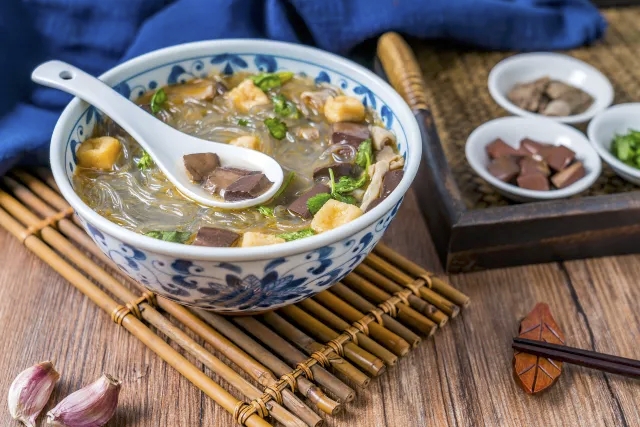
Nanjing Duck Blood Vermicelli Soup (Nanjing Yaxue Fensi Tang) is far more than a simple snack—it is a steaming bowl of history, craftsmanship, and urban soul, standing as one of the most beloved treasures of Jinling cuisine. With roots tracing back to the late Ming and early Qing dynasties, this dish was born from the resourceful spirit of Nanjing’s food culture, where every part of the duck was honored and transformed into something exquisite. Over centuries, it has evolved from a humble street-side offering into a culinary icon that now graces both bustling food stalls and refined restaurant menus, earning its place as a must-try delicacy for visitors and a daily comfort for locals.
The soup is a masterclass in balance and depth. At its heart lies a rich, slow-simmered duck broth, made from whole duck bones and select cuts, cooked for hours until every drop is infused with savory umami. Into this golden elixir go tender cubes of duck blood, prized for their silky, jelly-like texture; delicate slices of duck liver, cooked just enough to retain a creamy richness; and chewy, impeccably cleaned duck intestines that offer a satisfying bite. These are joined by translucent vermicelli—made from mung bean or sweet potato starch—which absorb the broth’s essence while maintaining a springy, slippery resilience. The dish is served piping hot, crowned with a sprinkle of chopped scallions and sometimes a dash of white pepper to awaken the senses.
One of the soup’s most distinctive charms is its dual personality: the clear-broth version, which highlights the pure, refined flavor of duck and allows each ingredient to shine with understated elegance; and the milky-white version, achieved by emulsifying the broth through vigorous boiling, which yields a creamier, fuller-bodied mouthfeel that coats the palate with warmth. Both styles are beloved, and local gourmands often have fierce but friendly debates over which is superior—proof of the dish’s enduring vitality.
Eating Duck Blood Vermicelli Soup is an interactive ritual of personalization. At the table, diners are invited to customize their bowl with a flourish: a spoonful of fiery chili oil for heat, a handful of fresh cilantro for brightness, a drizzle of black vinegar for tang, or even a pinch of pickled mustard greens for an extra layer of crunch and saltiness. Each addition transforms the soup, making every bowl a unique expression of taste. The ideal experience is to sip the broth first, letting its warmth spread through the body, then savor the interplay of textures—the silky blood, the tender liver, the chewy intestines, and the slippery noodles—all in one harmonious spoonful.
Today, Nanjing Duck Blood Vermicelli Soup has transcended regional boundaries, becoming a beloved staple in cities across China, from Shanghai to Beijing to Guangzhou. It appears in night markets, food courts, and even instant noodle cups, yet purists insist that nothing compares to the authentic version served in the ancient alleys of Nanjing, where the scent of duck broth mingles with the city’s historic charm. Whether enjoyed on a chilly winter morning or a lazy summer evening, this steaming bowl of tender, fragrant, and soulful soup offers not just nourishment, but a taste of Nanjing’s enduring culinary spirit—a dish that comforts, delights, and connects generations, one spoonful at a time.