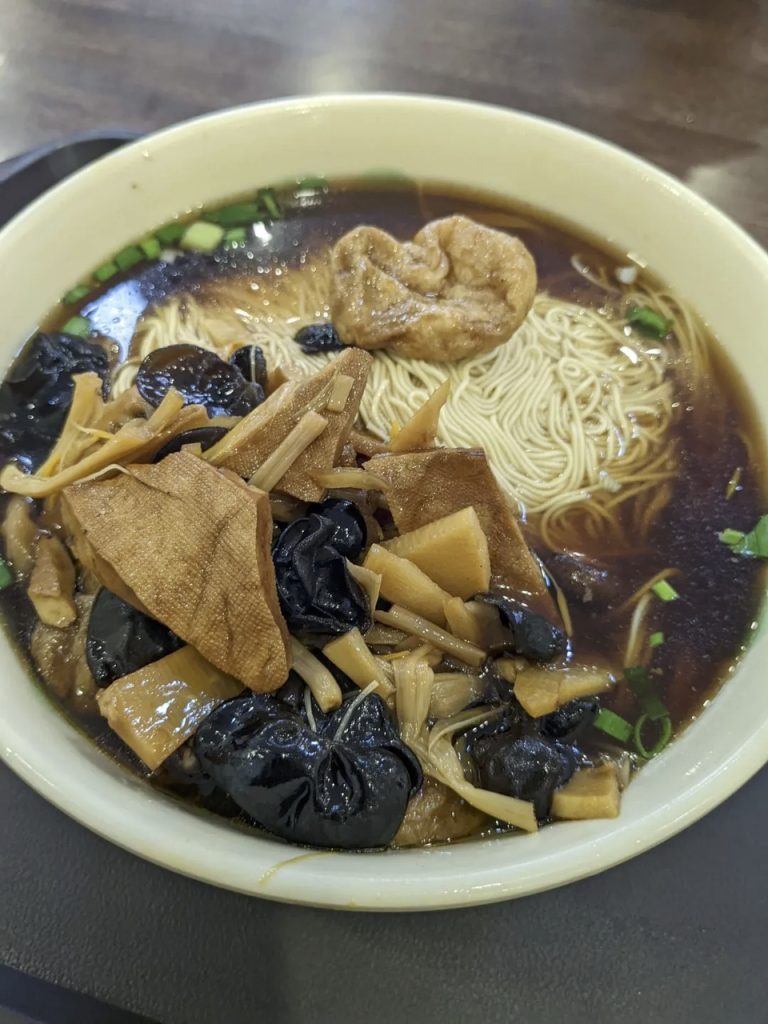
Deep within the Qixia Mountain in Nanjing, the bells of the thousand-year-old Qixia Temple have been echoing for over 1,600 years. And in the “Thousand-Buddha Vegetarian Hall” adjacent to the temple, a seemingly humble bowl of noodles draws countless diners from dozens of kilometers away—this is the legendary Qixia Temple Vegetarian Noodle, long renowned in Jinling’s vegetarian food scene.
I. The “Zen Secret” of a Bowl of Noodles: The Trio of Broth, Noodles, and Toppings
The beauty of Qixia Temple’s vegetarian noodles lies in its return to the essence of food. Every element—the broth, the noodles, the toppings—is simple yet profound, each carrying a subtle Zen philosophy.
The Broth is the Soul — The broth is made from over a dozen varieties of wild mushrooms (shiitake, porcini, termite mushrooms, and more), combined with soybean sprouts, dried bamboo shoots, red dates, and other ingredients, all slow-simmered over low heat for more than four hours. This process fully releases the umami sweetness of the mushrooms and the fresh fragrance of the vegetables. The broth emerges clear and golden—sip it, and you’ll experience a full-bodied mushroom aroma with a lingering sweet aftertaste. Free from the greasiness of meat stock yet crisp and pure like mountain spring water, it is truly the “crown of vegetarian soups.”
The Noodles are the Backbone — The noodles are made fresh daily by hand using an alkaline dough, giving them a resilient chewiness that holds up well without becoming mushy. The master kneads the dough with even, steady force, pulling each strand to a consistent thickness. Boiled to precise timing, the noodles are springy, smooth, and deliver a satisfying bounce with every bite.
The Toppings are the Spirit — A bowl of noodles is crowned with a carefully prepared medley of “vegetarian toppings”: richly braised vegetarian chicken (made from wheat gluten), infused with a secret soy-based marinade until deeply savory and aromatic; plump shiitake mushrooms that have absorbed the essence of the broth; a few vibrant green leafy vegetables to refresh the palate and add color; and a scattering of vegetarian ham cubes to complete the layers of texture.
These three elements blend in perfect harmony—each mouthful of noodle, sip of broth, and bite of topping brings a culinary experience of “simplicity elevated to brilliance,” capturing the essence of Zen philosophy on the palate.
II. A Millennium of Vegetarian Tradition: From Emperor Wu of Liang to the “Thousand-Buddha Hall”
The connection between Qixia Temple and vegetarian cuisine is nearly as old as the temple itself. Emperor Wu of Liang (Xiao Yan) during the Southern Dynasties was a devout Buddhist who famously renounced his throne multiple times to become a monk at Tongtai Temple. He also issued a nationwide decree banning alcohol and meat consumption, enshrining “abstinence from meat” as part of Buddhist precepts. As a major Buddhist center of the Southern Dynasties, Qixia Temple has upheld this vegetarian tradition for over a thousand years.
The “Thousand-Buddha Vegetarian Hall” — located beside the Qixia Temple Bell Tower and named in harmony with the nearby Thousand-Buddha Cliff — eschews the elaborate decor of city vegetarian restaurants, preserving instead the “simple and serene” atmosphere of a monastery dining hall. Outside the windows stand thousand-year-old ginkgo trees; inside, wooden tables and long benches await. When a bowl of noodles is served, the rising steam seems to carry whispers of the Six Dynasties’ misty rivers. Chen Xiaoqing, chief director of CCTV’s A Bite of China, made a special visit and praised the noodles profusely. Author Ma Boyong also wrote in his travel essays that these were “the most comforting bowl of noodles in Jinling.”
III. Beyond the Noodles: The Full Vegetarian Feast Experience
A bowl of noodles is only the beginning—the more exquisite vegetarian dishes at Qixia Temple’s vegetarian hall are the true highlight:
-
Vegetarian Roast Goose: Made from layers of tofu skin, slowly braised in a savory marinade until richly flavored. The outer layers are crisp and fragrant; the inside is tender and multilayered. With its balance of savory and sweet, this classic “imitation meat” vegetarian dish is nearly indistinguishable from real roast goose.
-
Vegetarian Ham: Crafted from wheat gluten and soy products through a unique process of pressing and smoking. It has a rich red hue, and when sliced thin as paper, offers a savory, firm texture with a satisfying chew—perfect as a snack with tea or wine.
-
Vegetarian Assorted Delight: A colorful medley of over a dozen seasonal vegetables—wood ear mushrooms, tofu skin, winter bamboo shoots, shiitake mushrooms, shepherd’s purse, and more—stir-fried with sesame oil and vegetarian stock. Light, wholesome, and vibrant, it is the vegetarian version of the classic “Ten Assorted Vegetables” on Nanjing’s Spring Festival table.
-
Vegetarian Duck Rolls: Tofu skin wrapped around a filling of mushrooms, bamboo shoots, and diced carrots, then pan-fried to a crisp golden brown—crispy on the outside, tender and layered on the inside.
-
Red Bean Glutinous Rice Balls: Red beans slowly simmered to a creamy consistency with chewy glutinous rice balls. Sweet but not cloying, it warms the stomach and the soul on a cold winter day.
IV. A Guide to Savoring: How to Enjoy This Bowl of Noodles
-
Best Time to Visit: It is recommended to tour Qixia Temple and Thousand-Buddha Cliff in the morning and visit the vegetarian hall between 11:00 AM and 1:00 PM. At this time, the noodles are freshly cooked, the toppings are at their best, and you can avoid the midday rush.
-
Dining Process: Purchase your meal ticket first, then collect your noodles at the counter and find a seat. It’s recommended to take three sips of the broth to awaken your palate, then enjoy the noodles and toppings, and finally finish the broth—it’s the greatest respect you can show the chef.
-
Takeaway Options: The vegetarian hall offers vacuum-packed vegetarian roast goose and vegetarian ham, perfect as gifts or souvenirs.
V. Practical Information
-
Location: Beside the Qixia Temple Bell Tower, with a plaque at the entrance inscribed with “Thousand-Buddha Vegetarian Hall.”
-
Price: Signature noodle bowl: approximately 25–35 RMB (subject to slight variations).
-
Other dishes: à la carte items such as vegetarian roast goose, vegetarian ham, assorted delights, and duck rolls average around 60–100 RMB per person.
-
Important notes: No meat products are served—please respect the temple’s traditions and refrain from bringing meat or alcohol into the hall. Practice gratitude and avoid food waste, following the “Clean Plate” initiative.
The Qixia Temple Vegetarian Noodles offer not just a bowl of purity, but a taste of Zen. The fusion of incense smoke and temple chants, mountain forests and vegetarian cuisine, creates an experience that warms the hearts of Nanjing locals like no other. If you find yourself at Qixia Mountain, slow down, take a seat beneath the ancient ginkgo trees, and savor a bowl of noodles—and let the serene tranquility of this thousand-year-old temple and the warmth of everyday life dissolve together on your palate.