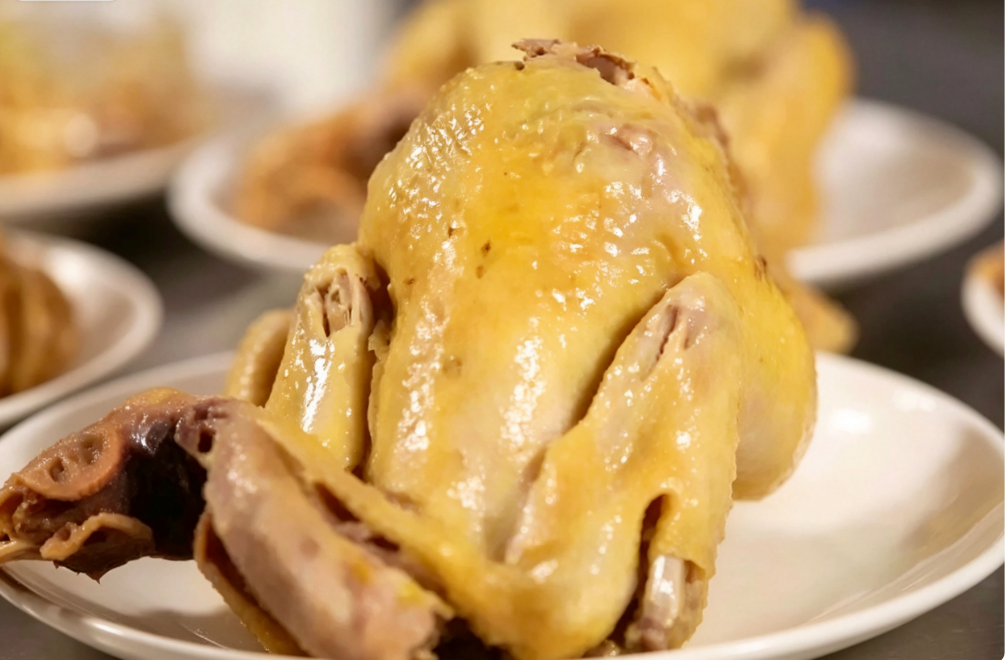
In Honglan Subdistrict, Lishui District, Nanjing, there is a dish that draws countless food lovers from dozens of kilometers away—Honglan Hand-Torn Chicken. This is more than just a rustic delicacy; it is a masterpiece of Nanjing’s Intangible Cultural Heritage and the most iconic culinary symbol of Lishui.
I. Intangible Cultural Heritage: Three Generations of Dedicated Artisans
The art of Honglan Hand-Torn Chicken has a long and rich history. During the Ming Dynasty, Honglan was already an important trading hub in Lishui. This dish was widely popular among farming families in Honglan, Putang, Kongzhen, and Shiqiu. During festivals and celebrations, local households would steam and serve their own free-range chickens at the table. In 2020, Honglan Hand-Torn Chicken was selected for Jiangsu Province’s “Top 100 Local Landmark Dishes” list. In 2023, its preparation techniques were officially inscribed in the Nanjing Municipal Intangible Cultural Heritage Representative Project List.
The inheritor, Rui Yongmei, comes from a family of three generations dedicated to making hand-torn chicken. Her grandmother, Rui Aiying, made a living by raising chickens and would first steam and then boil her own free-range chickens. Her mother inherited this craft. In 1991, Rui Yongmei founded Rui’s Hand-Torn Chicken Restaurant, continuously refining the recipe through years of practice. Using the simplest accompaniments and the three-step process of steaming, boiling, and simmering, she maximizes the preservation of the chicken’s natural flavor and aroma. Today, Rui Yongmei is not only an inheritor of intangible cultural heritage but has also been honored as one of Nanjing’s 365 Good Samaritans and a Jiangsu Provincial Love Ambassador. She has donated over 7 million yuan to charitable causes and has become “Mother Rui” to 40 disadvantaged children and “Daughter” to 108 elderly residents living alone.
II. The Art of Selection: Good Mountains and Waters Raise Good Chickens
The deliciousness of Honglan Hand-Torn Chicken begins with the strict selection of ingredients. The chickens must be free-range female mountain-roaming chickens, raised without hormone-laden feed, with their weight strictly controlled at around 2.8 to 3.3 jin (approximately 1.4 to 1.65 kg). The farms must be located in a natural environment with mountains and water, where sunlight, temperature, and humidity all align with the chickens’ natural growth conditions. Some recipes prefer free-range chickens raised for over two years, whose meat is firmer and flavor more robust.
III. Three Secrets of Preparation: The Art of Steaming, Boiling, and Simmering
The preparation of Honglan Hand-Torn Chicken may appear simple, but it conceals considerable skill. The whole chicken is first steamed, then boiled, and finally simmered over low heat—each of the three steps takes about fifteen minutes, with the control of heat and timing relying entirely on experience.
-
Steaming — Steaming the chicken in a covered pot locks in its natural juices and aroma.
-
Boiling — The chicken is placed in cold water with spices and herbs such as cinnamon, licorice, and sand ginger, allowing the herbal fragrance to slowly permeate the meat.
-
Simmering — The heat is turned off, and the chicken is left to rest, allowing the residual warmth to further tenderize the meat while the juices are fully reabsorbed.
Throughout the process, only the simplest accompaniments are used—they do not overpower the chicken’s natural flavor but rather enhance and complement it. The finished hand-torn chicken is golden in color, with springy skin, tender and juicy meat, and an irresistible aroma.
IV. The Art of Eating: Hand-Torn and Dipped in Sauce—The Authentic Way
The most authentic way to enjoy Honglan Hand-Torn Chicken is to tear it by hand. No knives or choppers—just use your hands to pull the meat apart. This preserves the chicken’s natural texture and juices while adding a rustic, communal spirit to the dining experience. The torn pieces are then dipped into the restaurant’s secret soy-based dipping sauce, whose savory, slightly spicy flavor fully unlocks the natural sweetness of the chicken. As one diner put it: “You have to dip it in their special sauce—that’s when the magic happens.”
V. Where to Find It
For the most authentic Honglan Hand-Torn Chicken experience, Rui’s Hand-Torn Chicken Restaurant (Honglan Hand-Torn Chicken & Braised Goose) is the place to go. Located on Jinniu North Road in Honglan Subdistrict, Lishui District, the restaurant has an average spend of about 70–90 RMB per person, with the hand-torn chicken being the must-order signature dish at every table. During peak tourist seasons, daily foot traffic can reach over a thousand customers, making it a true “must-visit hotspot.”
Honglan Hand-Torn Chicken—one dish, three generations, over a century of heritage. It carries not just the natural bounty of Lishui’s mountains and waters, but also a deep respect for and commitment to traditional craftsmanship. When you visit Lishui, if you don’t taste this hand-torn intangible cultural heritage delicacy, you can’t truly say you’ve been there.
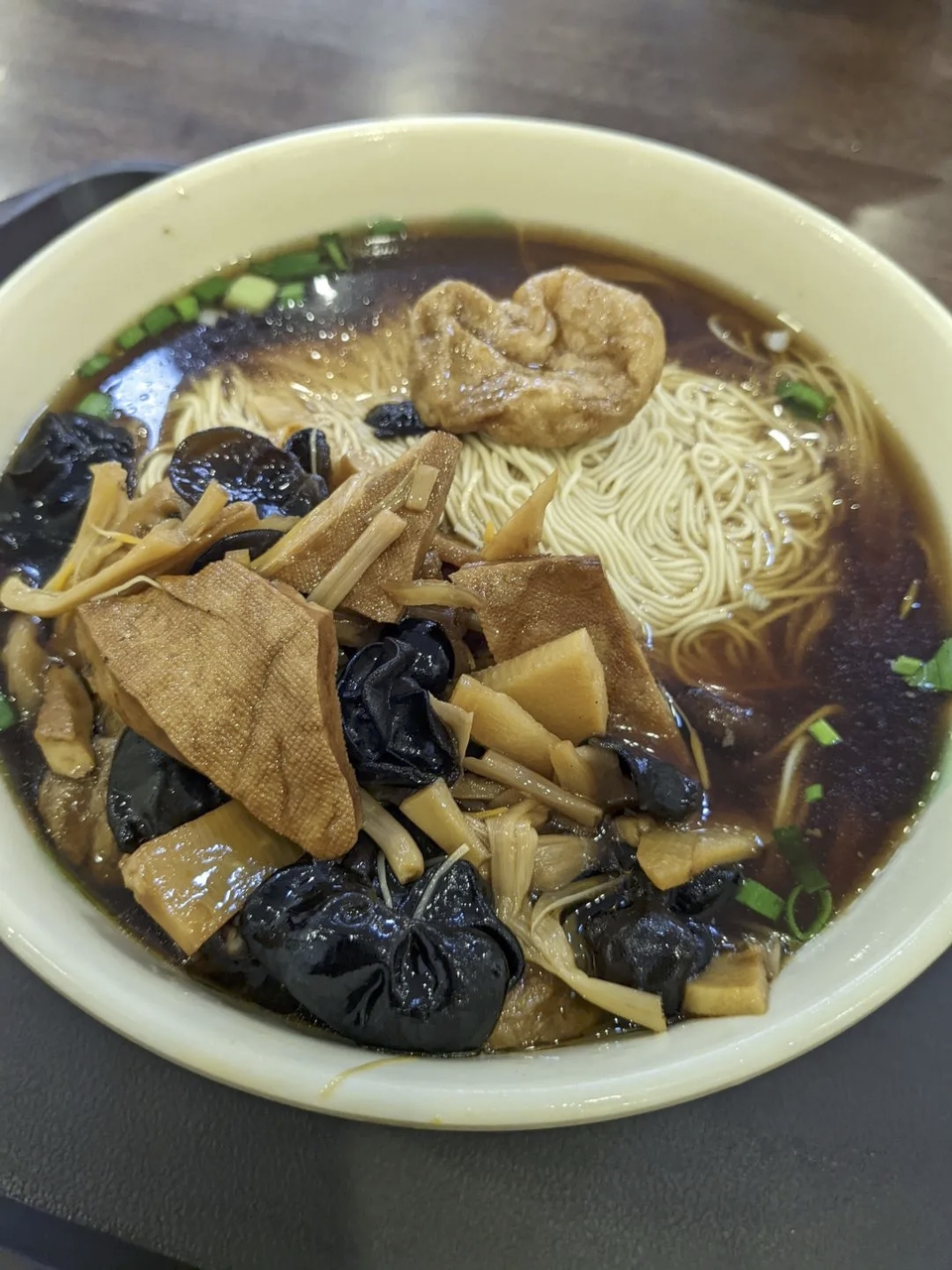
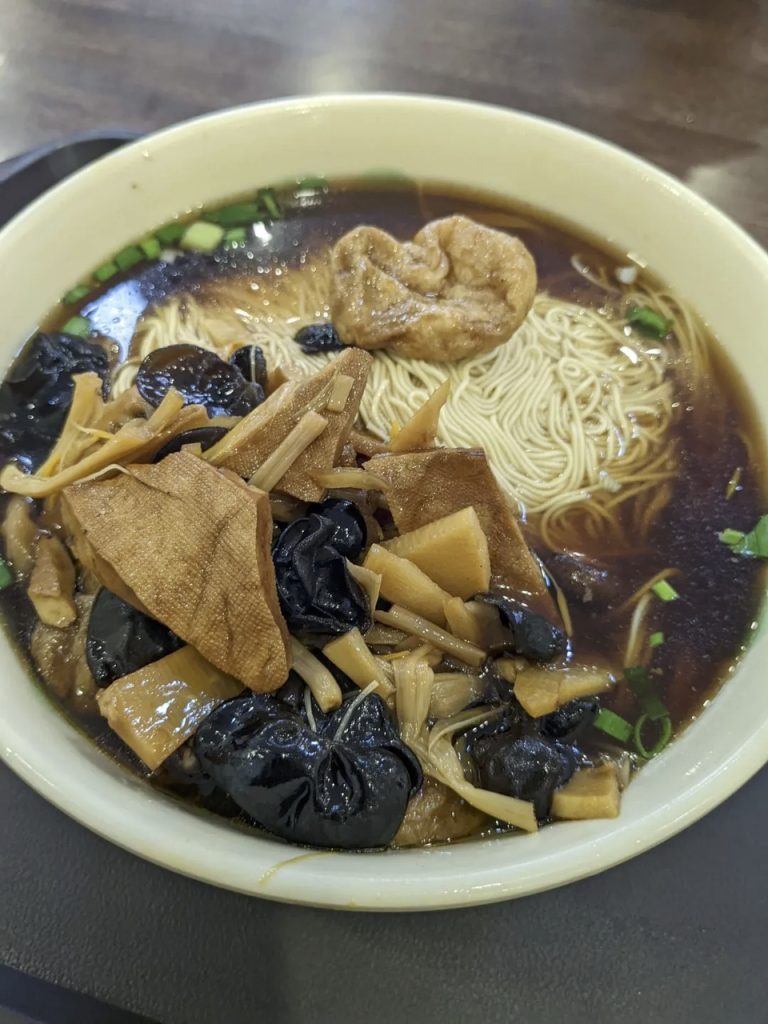
Deep within the Qixia Mountain in Nanjing, the bells of the thousand-year-old Qixia Temple have been echoing for over 1,600 years. And in the “Thousand-Buddha Vegetarian Hall” adjacent to the temple, a seemingly humble bowl of noodles draws countless diners from dozens of kilometers away—this is the legendary Qixia Temple Vegetarian Noodle, long renowned in Jinling’s vegetarian food scene.
I. The “Zen Secret” of a Bowl of Noodles: The Trio of Broth, Noodles, and Toppings
The beauty of Qixia Temple’s vegetarian noodles lies in its return to the essence of food. Every element—the broth, the noodles, the toppings—is simple yet profound, each carrying a subtle Zen philosophy.
The Broth is the Soul — The broth is made from over a dozen varieties of wild mushrooms (shiitake, porcini, termite mushrooms, and more), combined with soybean sprouts, dried bamboo shoots, red dates, and other ingredients, all slow-simmered over low heat for more than four hours. This process fully releases the umami sweetness of the mushrooms and the fresh fragrance of the vegetables. The broth emerges clear and golden—sip it, and you’ll experience a full-bodied mushroom aroma with a lingering sweet aftertaste. Free from the greasiness of meat stock yet crisp and pure like mountain spring water, it is truly the “crown of vegetarian soups.”
The Noodles are the Backbone — The noodles are made fresh daily by hand using an alkaline dough, giving them a resilient chewiness that holds up well without becoming mushy. The master kneads the dough with even, steady force, pulling each strand to a consistent thickness. Boiled to precise timing, the noodles are springy, smooth, and deliver a satisfying bounce with every bite.
The Toppings are the Spirit — A bowl of noodles is crowned with a carefully prepared medley of “vegetarian toppings”: richly braised vegetarian chicken (made from wheat gluten), infused with a secret soy-based marinade until deeply savory and aromatic; plump shiitake mushrooms that have absorbed the essence of the broth; a few vibrant green leafy vegetables to refresh the palate and add color; and a scattering of vegetarian ham cubes to complete the layers of texture.
These three elements blend in perfect harmony—each mouthful of noodle, sip of broth, and bite of topping brings a culinary experience of “simplicity elevated to brilliance,” capturing the essence of Zen philosophy on the palate.
II. A Millennium of Vegetarian Tradition: From Emperor Wu of Liang to the “Thousand-Buddha Hall”
The connection between Qixia Temple and vegetarian cuisine is nearly as old as the temple itself. Emperor Wu of Liang (Xiao Yan) during the Southern Dynasties was a devout Buddhist who famously renounced his throne multiple times to become a monk at Tongtai Temple. He also issued a nationwide decree banning alcohol and meat consumption, enshrining “abstinence from meat” as part of Buddhist precepts. As a major Buddhist center of the Southern Dynasties, Qixia Temple has upheld this vegetarian tradition for over a thousand years.
The “Thousand-Buddha Vegetarian Hall” — located beside the Qixia Temple Bell Tower and named in harmony with the nearby Thousand-Buddha Cliff — eschews the elaborate decor of city vegetarian restaurants, preserving instead the “simple and serene” atmosphere of a monastery dining hall. Outside the windows stand thousand-year-old ginkgo trees; inside, wooden tables and long benches await. When a bowl of noodles is served, the rising steam seems to carry whispers of the Six Dynasties’ misty rivers. Chen Xiaoqing, chief director of CCTV’s A Bite of China, made a special visit and praised the noodles profusely. Author Ma Boyong also wrote in his travel essays that these were “the most comforting bowl of noodles in Jinling.”
III. Beyond the Noodles: The Full Vegetarian Feast Experience
A bowl of noodles is only the beginning—the more exquisite vegetarian dishes at Qixia Temple’s vegetarian hall are the true highlight:
-
Vegetarian Roast Goose: Made from layers of tofu skin, slowly braised in a savory marinade until richly flavored. The outer layers are crisp and fragrant; the inside is tender and multilayered. With its balance of savory and sweet, this classic “imitation meat” vegetarian dish is nearly indistinguishable from real roast goose.
-
Vegetarian Ham: Crafted from wheat gluten and soy products through a unique process of pressing and smoking. It has a rich red hue, and when sliced thin as paper, offers a savory, firm texture with a satisfying chew—perfect as a snack with tea or wine.
-
Vegetarian Assorted Delight: A colorful medley of over a dozen seasonal vegetables—wood ear mushrooms, tofu skin, winter bamboo shoots, shiitake mushrooms, shepherd’s purse, and more—stir-fried with sesame oil and vegetarian stock. Light, wholesome, and vibrant, it is the vegetarian version of the classic “Ten Assorted Vegetables” on Nanjing’s Spring Festival table.
-
Vegetarian Duck Rolls: Tofu skin wrapped around a filling of mushrooms, bamboo shoots, and diced carrots, then pan-fried to a crisp golden brown—crispy on the outside, tender and layered on the inside.
-
Red Bean Glutinous Rice Balls: Red beans slowly simmered to a creamy consistency with chewy glutinous rice balls. Sweet but not cloying, it warms the stomach and the soul on a cold winter day.
IV. A Guide to Savoring: How to Enjoy This Bowl of Noodles
-
Best Time to Visit: It is recommended to tour Qixia Temple and Thousand-Buddha Cliff in the morning and visit the vegetarian hall between 11:00 AM and 1:00 PM. At this time, the noodles are freshly cooked, the toppings are at their best, and you can avoid the midday rush.
-
Dining Process: Purchase your meal ticket first, then collect your noodles at the counter and find a seat. It’s recommended to take three sips of the broth to awaken your palate, then enjoy the noodles and toppings, and finally finish the broth—it’s the greatest respect you can show the chef.
-
Takeaway Options: The vegetarian hall offers vacuum-packed vegetarian roast goose and vegetarian ham, perfect as gifts or souvenirs.
V. Practical Information
-
Location: Beside the Qixia Temple Bell Tower, with a plaque at the entrance inscribed with “Thousand-Buddha Vegetarian Hall.”
-
Price: Signature noodle bowl: approximately 25–35 RMB (subject to slight variations).
-
Other dishes: à la carte items such as vegetarian roast goose, vegetarian ham, assorted delights, and duck rolls average around 60–100 RMB per person.
-
Important notes: No meat products are served—please respect the temple’s traditions and refrain from bringing meat or alcohol into the hall. Practice gratitude and avoid food waste, following the “Clean Plate” initiative.
The Qixia Temple Vegetarian Noodles offer not just a bowl of purity, but a taste of Zen. The fusion of incense smoke and temple chants, mountain forests and vegetarian cuisine, creates an experience that warms the hearts of Nanjing locals like no other. If you find yourself at Qixia Mountain, slow down, take a seat beneath the ancient ginkgo trees, and savor a bowl of noodles—and let the serene tranquility of this thousand-year-old temple and the warmth of everyday life dissolve together on your palate.
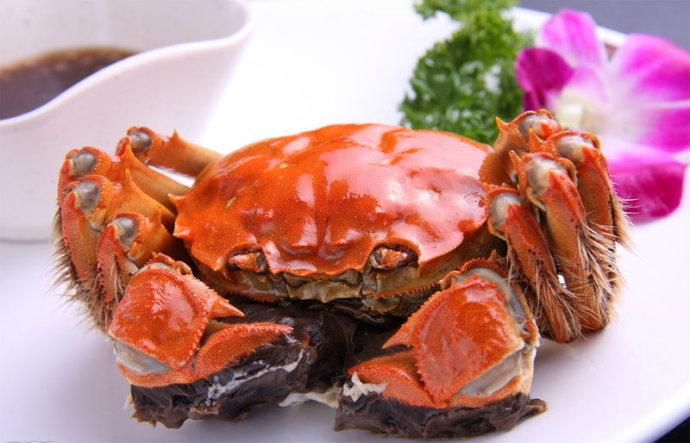
By the shores of Gucheng Lake in Gaochun, Nanjing, lies an autumn delicacy that captivates countless food lovers—the Gucheng Lake hairy crab. Hailed as the “Crown of Crabs,” it is not only a National Geographical Indication Protected Product but also China’s first well-known trademark in the aquaculture industry.
I. Crystal-Clear Waters Nurture Superior Crabs
With waters spanning a hundred li in all directions, Gucheng Lake is abundant in aquatic vegetation and boasts pristine, unpolluted water. Gaochun District has over 220,000 mu of high-quality crab ponds. The crab farmers adhere to a philosophy of “slow-growing“—using no hormones, no growth-accelerating agents, and allowing every crab to mature naturally through the full cycle of molting.
The feeding regimen is equally meticulous, following a “three meat, three vegetable” formula: snails, small fish, and shrimp, combined with soybeans, corn, and aquatic plants. This careful nourishment gives Gucheng Lake crabs their signature eight characteristics: “plump, large, aromatic, fresh, sweet, green, early, and beautiful. “
II. Green Shell, White Belly, Golden Claws, Yellow Leg Hairs
A qualified Gucheng Lake crab is instantly recognizable by its distinctive features:
-
Green Shell: The carapace has a bluish-gray hue, smooth and glossy.
-
White Belly: The underbelly is crystal clear and pristine white, free of dark spots.
-
Yellow Leg Hairs: The hairs on the crab legs are long and golden yellow, smooth and well-groomed.
-
Golden Claws: The crab pincers are golden, firm, and powerful—when placed on a glass plate, they stand erect on all eight legs, presenting a majestic appearance.
III. Rich Roe and Golden Huang: The Perfect Season
As the saying goes, “Round navels in September, pointed navels in October.” September through November is the prime season for enjoying Gucheng Lake hairy crabs:
-
September–October (female crabs) : The roe is plump and rich, glistening with red oil, with a savory, fragrant, and mellow flavor.
-
October–November (male crabs) : The amber roe is translucent, viscous, and creamy—growing even more aromatic as the weather turns cooler.
Gucheng Lake crabs are known for arriving on the market early, often gracing dining tables ahead of other varieties. In 2024, the district’s annual crab production is expected to exceed 20,000 tons. This advantage of being the earliest to market has given Gaochun crab farmers a head start in the industry.
IV. Steaming Is the Supreme Tribute to Natural Flavor
For such a premium crab, the highest respect is to prepare it by steaming. A refined approach involves: thoroughly scrubbing the live crabs, removing the intestinal tract via the belly flap, drizzling with Shaoxing wine, sprinkling with Sichuan peppercorns and salt, and tying the claws and legs securely with string. Steamed over high heat with abundant water, they are served with a dipping sauce of minced ginger and aged vinegar—the white, delicate crab meat paired with the golden roe creates the grandest celebration of autumn in every bite.
In 2020, Gaochun’s steamed Gucheng Lake hairy crab was selected as one of Jiangsu Province’s 100 Rural Landmark Dishes—a well-deserved recognition. Today, the Gucheng Lake crab industry has developed into a full industrial chain, employing over 100,000 people and generating an annual output value exceeding 10 billion yuan. A single crab is not only Gaochun’s culinary symbol but also a golden calling card that sustains an entire region.
When autumn arrives and the crabs are at their fullest, make your way to the shores of Gucheng Lake and taste this authentic Jinling autumn delicacy.
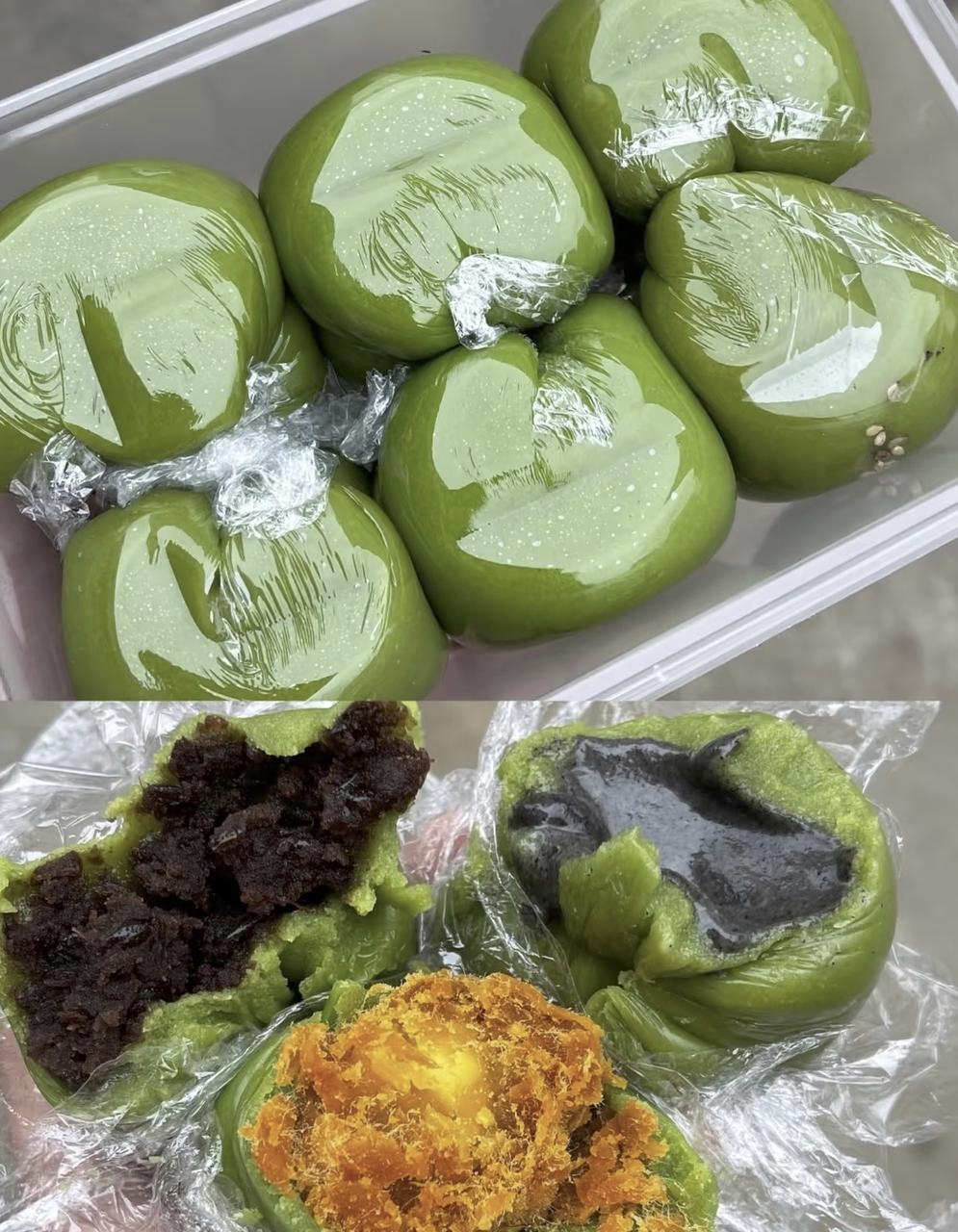
In Nanjing, when people talk about qingtuan (green rice balls), the name that springs to mind is often Auntie Xu’s Pastry Shop. This thirty-year-old establishment began its journey in 1994 as a small pushcart at the entrance of an alley in Gulou District. Starting with just a few classic pastries, it has grown into an unmissable culinary icon on every visitor’s Nanjing checklist—”must-eat, must-take-home.” Through three generations of dedication, Auntie Xu’s has preserved the tender, chewy memory of old Nanjing’s glutinous treats.
In 2026, Auntie Xu’s Pastry Shop was recognized as a “Famous, Special, Superior and Innovative” sole trader in Jianye District for its traditional craftsmanship and high-quality ingredients. This official recognition not only affirms the shop’s quality but also makes it a trusted “springtime calling card” in the eyes of visitors from afar.
I. Signature Qingtuan: The “Evergreen Internet Sensation” with Thin Wrappers and Generous Fillings
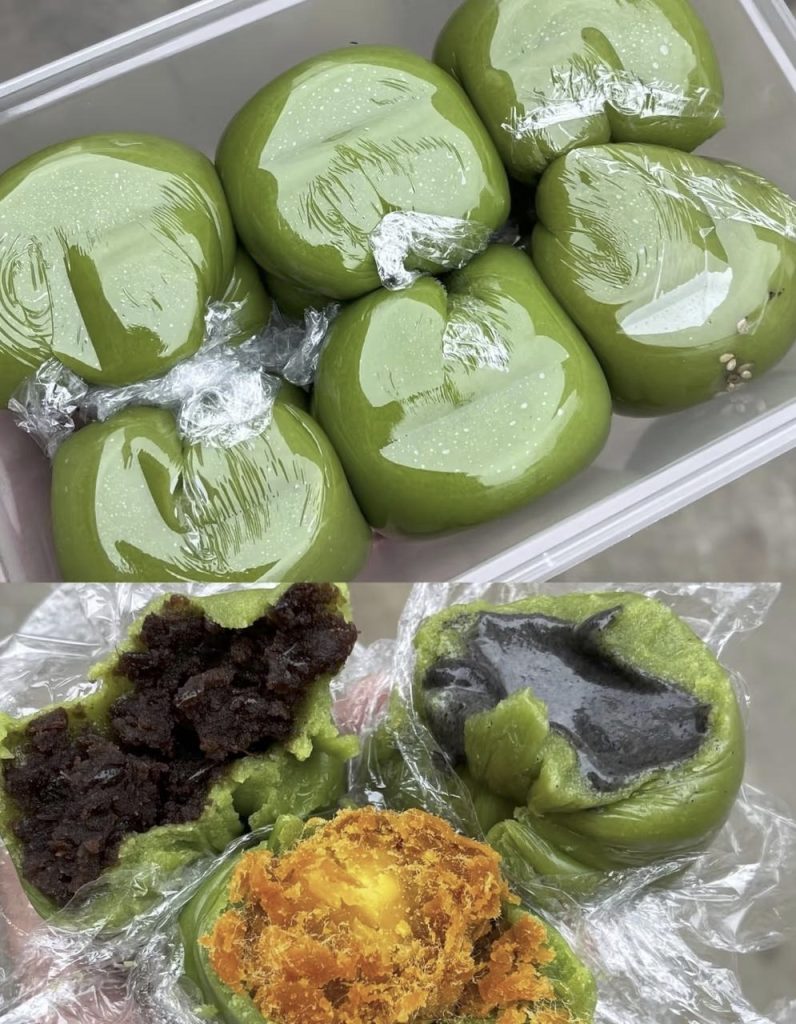
Every spring, the long queue snaking outside Auntie Xu’s Pastry Shop is practically a defining scene of Jinling’s seasonal charm. The shop’s qingtuan are made using traditional methods, resulting in a soft, chewy, and springy exterior with a subtle fragrance of mugwort—sticky to the touch but never clinging to the teeth.
-
Salted Egg Yolk and Pork Floss Qingtuan (8 RMB each): Undeniably the shop’s top seller. These qingtuan are generously sized, with a thin wrapper enveloping an entire rich, sandy salted egg yolk, surrounded by sweet-salty pork floss. With each bite, layers of glutinous, savory, and eggy flavors unfold—hailed by loyal customers as the “eternal favorite.”
-
Red Bean Paste Qingtuan (approximately 4.5 RMB each): A classic sweet filling, with red bean paste slowly simmered in-house to a smooth, rich, and delicately sweet consistency—a beloved choice for those with a sweet tooth.
-
Black Sesame Qingtuan (approximately 4.5 RMB each): The sesame filling is exceptionally smooth with a rich, runny center, delivering a burst of nutty aroma that lingers long after each bite.
II. Beyond Qingtuan: A Treasure Trove of Traditional Pastries
Beyond qingtuan, Auntie Xu’s other traditional pastries are equally worthy of attention:
-
Water Chestnut Cake (approximately 3 RMB each): Sweet and soft with a delightful chew, featuring a layer of fine red bean paste in the middle for added texture.
-
Donkey Rolling Cake (Lǘdagun, approximately 3 RMB each): The exterior is coated in fragrant roasted soybean flour, wrapped around a soft, chewy glutinous layer filled with sweet red bean paste—a nostalgic favorite.
-
Glutinous Rice Dumplings (approximately 3 RMB each): Soft and springy, filled with sweet fillings that evoke childhood memories for many.
III. Practical Information
-
Main Store Address: 1st Floor, No. 109 Yanling Lane, Qinhuai District, Nanjing (approximately 370 meters’ walk from Exit 2 of Daxinggong Metro Station).
-
Opening Hours: Daily, 7:30 AM – 7:30 PM.
-
Average Spending: Approximately 24 RMB per person.
-
Tips: All pastries are freshly made daily and have a short shelf life—best consumed on the day of purchase or stored in the refrigerator. Due to its immense popularity, be prepared to queue during peak hours.
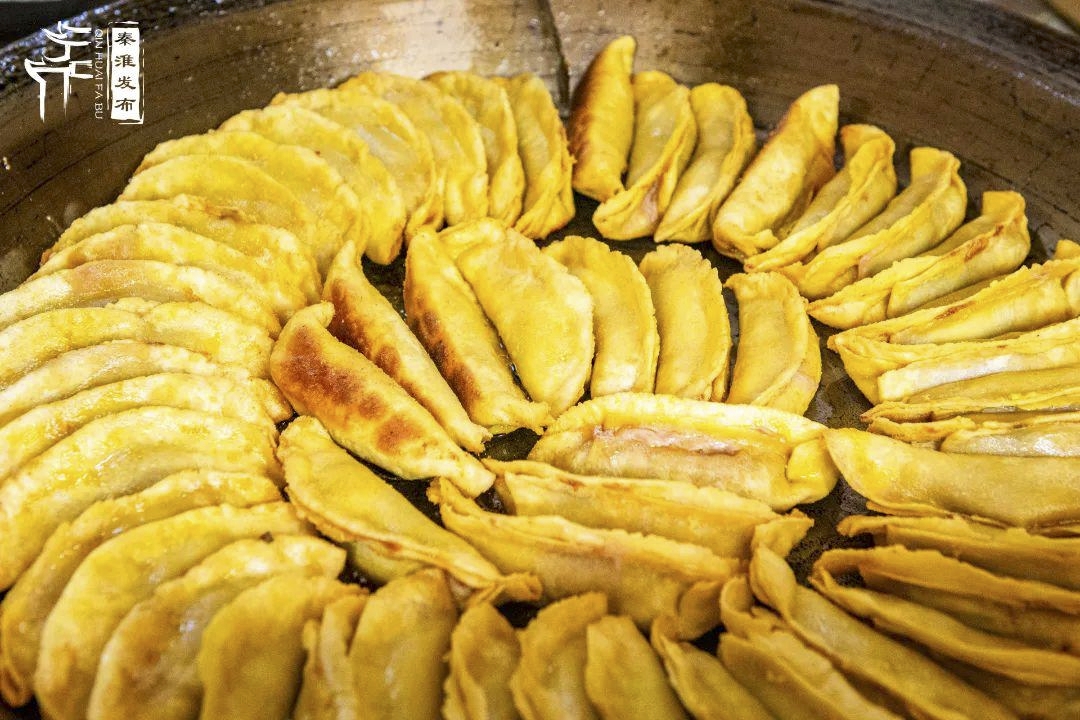
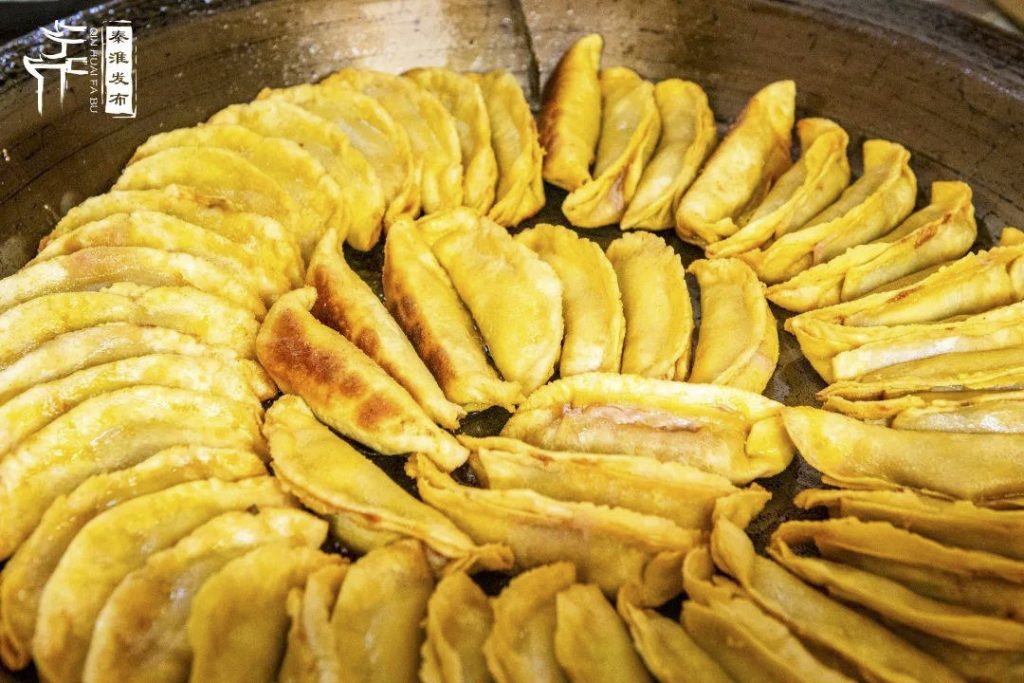
When people in Nanjing talk about “crispy” foods, the conversation almost inevitably turns to one iconic street snack—beef potstickers (niurou guotie) . These golden, pan-fried crescent-shaped dumplings, with their sizzling bottoms and juicy fillings, represent the pinnacle of Jinling’s crispy culinary tradition and hold an almost legendary status in the city’s food culture.
I. A Street Snack That Defines a City’s Flavor
Nanjing beef potstickers are a quintessential example of “stove-side” dining—the kind of humble, unpretentious street food that forms the backbone of the city’s culinary identity. Unlike the daintier dumplings served in upscale restaurants, Nanjing’s beef potstickers are bold, rustic, and reassuringly hearty. They are the food of early mornings and late nights, of hurried breakfasts and leisurely weekend brunches, of shared plates and spontaneous cravings.
The appeal of these potstickers lies in their dual-textured perfection: the bottom is pan-fried to a deep golden-brown crispiness, while the top remains soft and slightly chewy, creating a satisfying contrast that is pure comfort food magic. The filling is equally well-considered—finely minced beef mixed with chopped scallions, ginger, and a hint of local seasonings, resulting in a savory, juicy center that bursts with flavor with every bite.
II. The Legacy of “Check-In Worthy” Spots: Hidden Gems in Narrow Alleys
Many of Nanjing’s best beef potstickers are found not in glossy shopping malls but in humble, unassuming shops tucked away in narrow lanes and bustling neighborhoods. These small eateries, some of which have been operating for over 30 years, are the hidden treasures of Nanjing’s food scene.
-
Li Ji Beef Potstickers (Qinhuai District) : A 20-year-old institution with a line snaking out the door every morning. Each potsticker is individually handmade and pan-fried in a custom-built iron pan. The store also has three branch locations, making it accessible to more diners.
-
Mao Jia Potstickers (Zhanyuan Road) : Famous for its authentic Huaiyang-style potstickers, where the filling is mixed with high-quality beef from local farms and each batch is pan-fried to order.
-
Cao Ji Dumplings (Anmen Street) : A 30-year-old establishment specializing in pork and beef potstickers served with its signature sweet and spicy dipping sauce.
-
Hui Family Beef Potstickers (Fuzimiao area) : This family-run shop has been serving the temple fair crowd for over 30 years, cherished for its consistently crispy texture and rich flavor.
These humble stalls have become “must-visit check-in spots” in countless travel guides and social media posts, drawing both locals and visitors who queue patiently for their golden treats.
III. A Snack for All Occasions: From Breakfast to Midnight Cravings
One of the joys of Nanjing beef potstickers is their versatility. They are just as satisfying as a quick breakfast on the way to work as they are as a late-night snack after a night out. Many shops open early in the morning and stay open until late in the evening, serving a steady stream of customers.
Locals often pair their potstickers with a bowl of millet porridge or a serving of duck blood and vermicelli soup, creating a meal that is both comforting and filling. A dollop of dark vinegar and a sprinkling of chili oil are the finishing touches—each diner adjusting the flavors to their own taste.
IV. Cultural Significance: More Than Just a Snack
Beyond their deliciousness, Nanjing beef potstickers embody a broader cultural phenomenon—the city’s deep appreciation for crispy, sizzling textures. Nanjing’s cuisine has long favored the interplay of textures, and the potsticker, with its crunchy bottom and soft, yielding wrapper, perfectly satisfies this preference. They are a reminder that good food doesn’t need to be complicated: just good ingredients, careful preparation, and a hot pan.
V. Where to Find the Best
| Shop Name | Location | Highlight |
|---|---|---|
| Li Ji Beef Potstickers | Qinhuai District | 20 years of tradition; the line forms early |
| Mao Jia Potstickers | Zhanyuan Road | Huaiyang-style filling; pan-fried to order |
| Cao Ji Dumplings | Anmen Street | Known for its sweet and spicy dipping sauce |
| Hui Family Beef Potstickers | Fuzimiao area | Over 30 years in the temple fair area |
VI. Visitor Tips
-
Best Time to Visit: Morning rush (7:00–9:00 AM) for the freshest batch; late evening for a quiet bite.
-
Dipping Sauces: Don’t miss the vinegar with shredded ginger and chili oil—they elevate the flavor profile.
-
Pairing Suggestions: Pair with a bowl of duck blood and vermicelli soup or millet porridge for a complete local experience.
-
Language Tip: Feel free to point at what others are eating—locals are happy to guide you through the ordering process.
From the golden crisp of its bottom to the savory burst of its juicy filling, a serving of Nanjing beef potstickers is a bite-sized journey into the heart of Jinling’s street food culture. Whether you discover them in a narrow lane, a bustling market, or a cozy corner shop, these sizzling morsels are guaranteed to leave you craving just one more.